UV-Protective Glazing Compared: Museum Glass vs. Acrylic vs. Standard Glass for Commercial Framing
A side-by-side comparison of every glazing option for commercial art programs — Museum Glass, Conservation Clear, OP3 acrylic, non-glare acrylic, and standard glass. Includes specs, cost tiers, and best-use recommendations by environment.
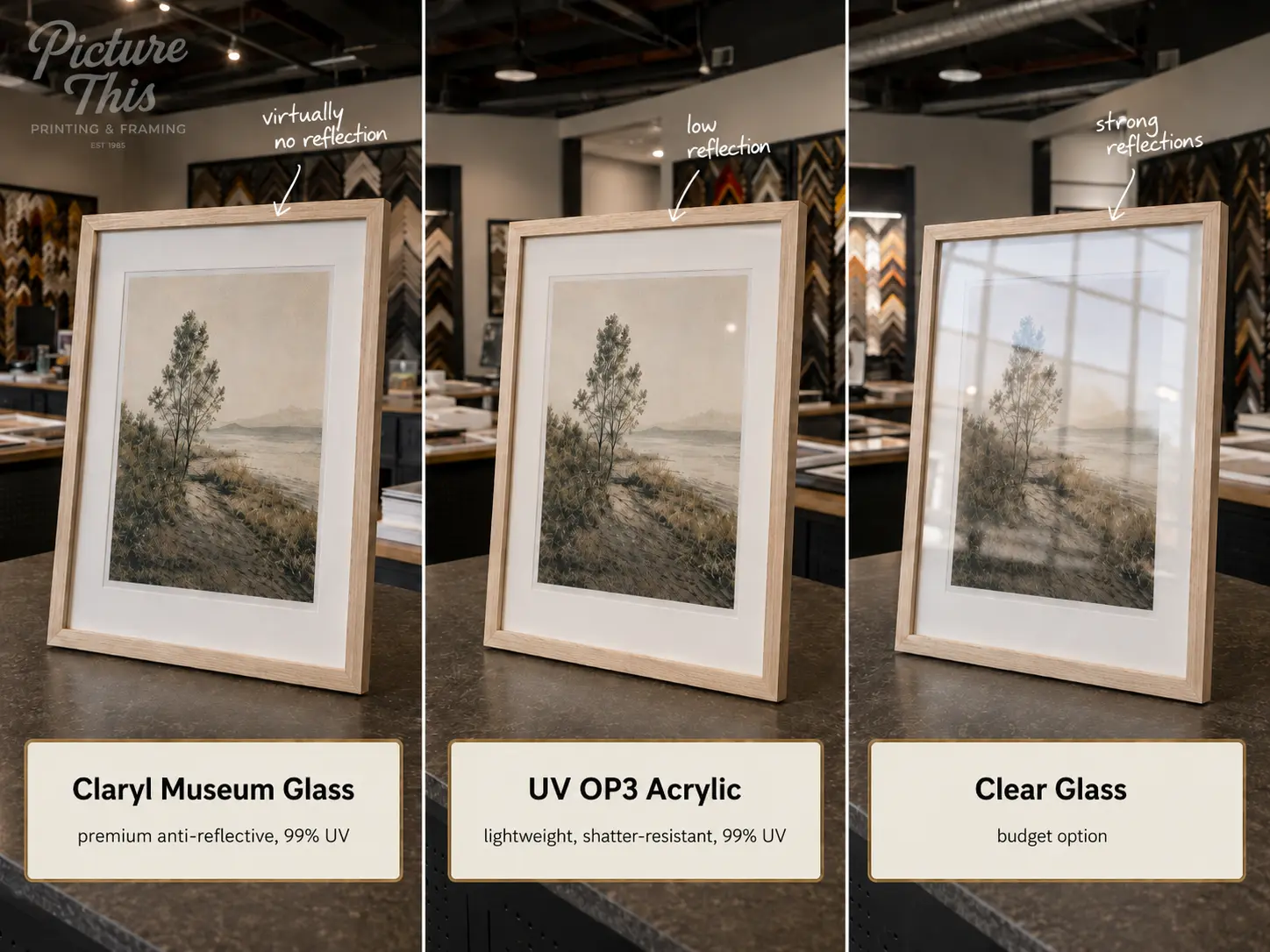
Glazing is the single most important decision for protecting artwork — and the one most frequently misspecified on commercial projects. The wrong choice costs you either money (overspecifying for corridors) or artwork longevity (underspecifying near windows). This guide compares every glazing option we offer at Picture This Framing in Fullerton, CA, with real specifications, cost context, and environment-specific recommendations.
Why Glazing Choice Matters More Than You Think
Unprotected artwork exposed to standard office or hotel lighting fades visibly within 3–7 years. Near windows, that timeline drops to 12–18 months. Glazing is the primary barrier between UV radiation and your investment.
But UV protection is only one factor. Weight, shatter resistance, optical clarity, anti-reflective properties, and cost all shape the right decision — and the right answer changes based on where the piece will hang.
The Complete Glazing Comparison
Swipe to see all columns
| Product | UV | Shatter-Proof | Anti-Glare | Cost |
|---|---|---|---|---|
| Clear Glass | 45% | No | No | $ |
| UV Resistant Glass | 99% | No | No | $ |
| Claryl Museum Glass | 99% | No | Yes | $$ |
| Clear Acrylic | 50% | Yes | No | $ |
| UV OP3 Acrylic | 99% | Yes | No | $$ |
| Non-Glare Acrylic | 90%+ | Yes | Yes | $$ |
Swipe to see all columns
| Product | Weight/ft² | Max Size | Clarity | Best For |
|---|---|---|---|---|
| Clear Glass | 1.6 lbs | 40x60" | Excellent | Budget, back-of-house |
| UV Resistant Glass | 1.6 lbs | 40x60" | Excellent | UV protection on budget |
| Claryl Museum Glass | 1.6 lbs | 40x60" | Superior | Premium focal pieces |
| Clear Acrylic | 0.75 lbs | 48x96"+ | Excellent | Lightweight, safety |
| UV OP3 Acrylic | 0.75 lbs | 48x96"+ | Excellent | Commercial standard |
| Non-Glare Acrylic | 0.75 lbs | 48x96"+ | Good | Reducing glare |
Detailed Breakdown: Each Option Explained
Clear Glass
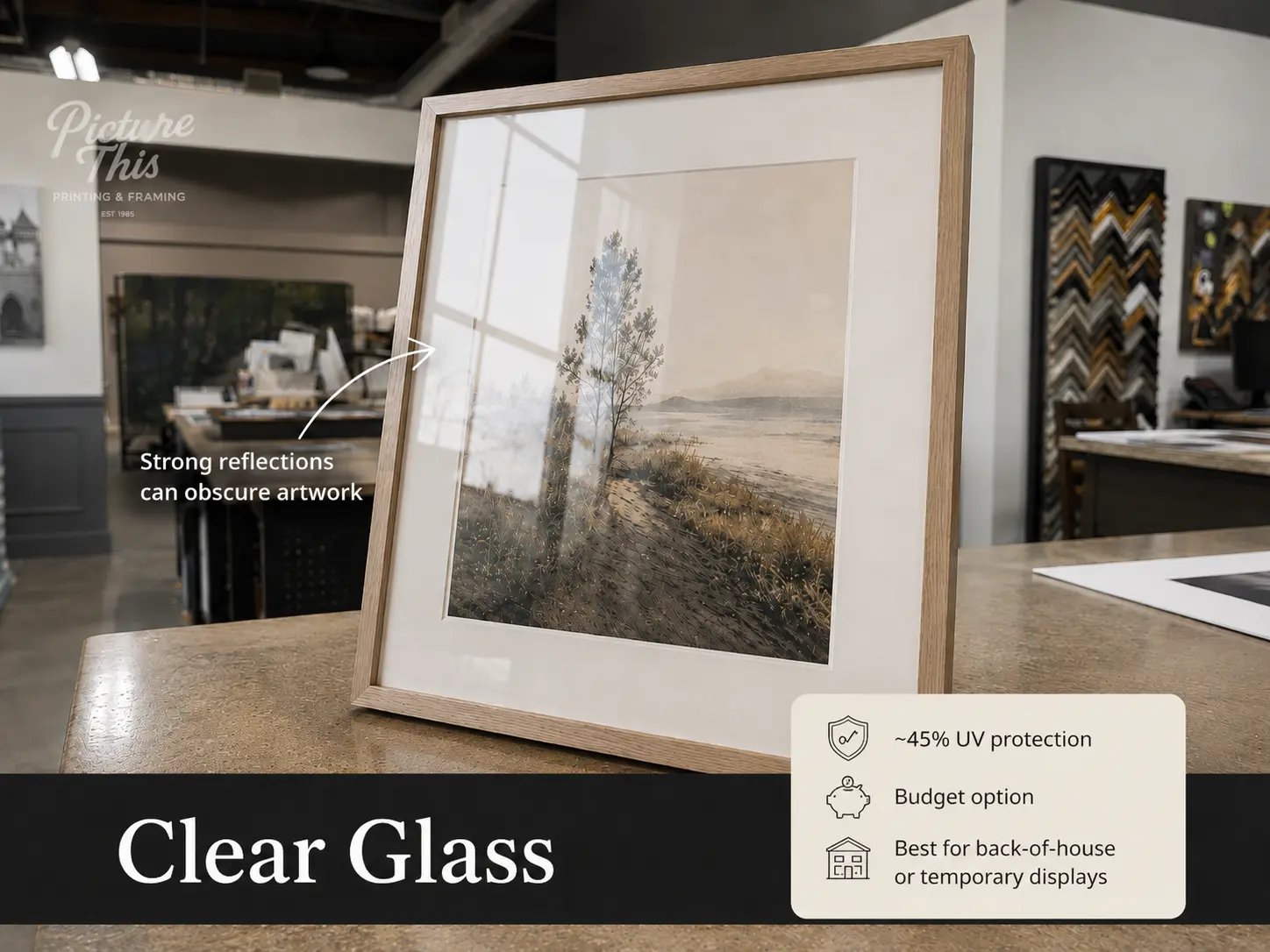
The baseline. Standard picture framing glass provides physical protection and acceptable clarity but offers minimal UV filtering — roughly 45% of UV radiation still passes through to the artwork.
When to use it:
Back-of-house or employee-only areas
Pieces that are easily replaceable
Projects where budget constraints are severe and UV exposure is minimal (interior walls far from windows)
Temporary displays or rotating artwork programs
When to avoid it:
Any piece near a window or under direct lighting for extended hours
Artwork with monetary or sentimental value
Healthcare, hospitality, or corporate environments where longevity matters
UV Resistant Glass
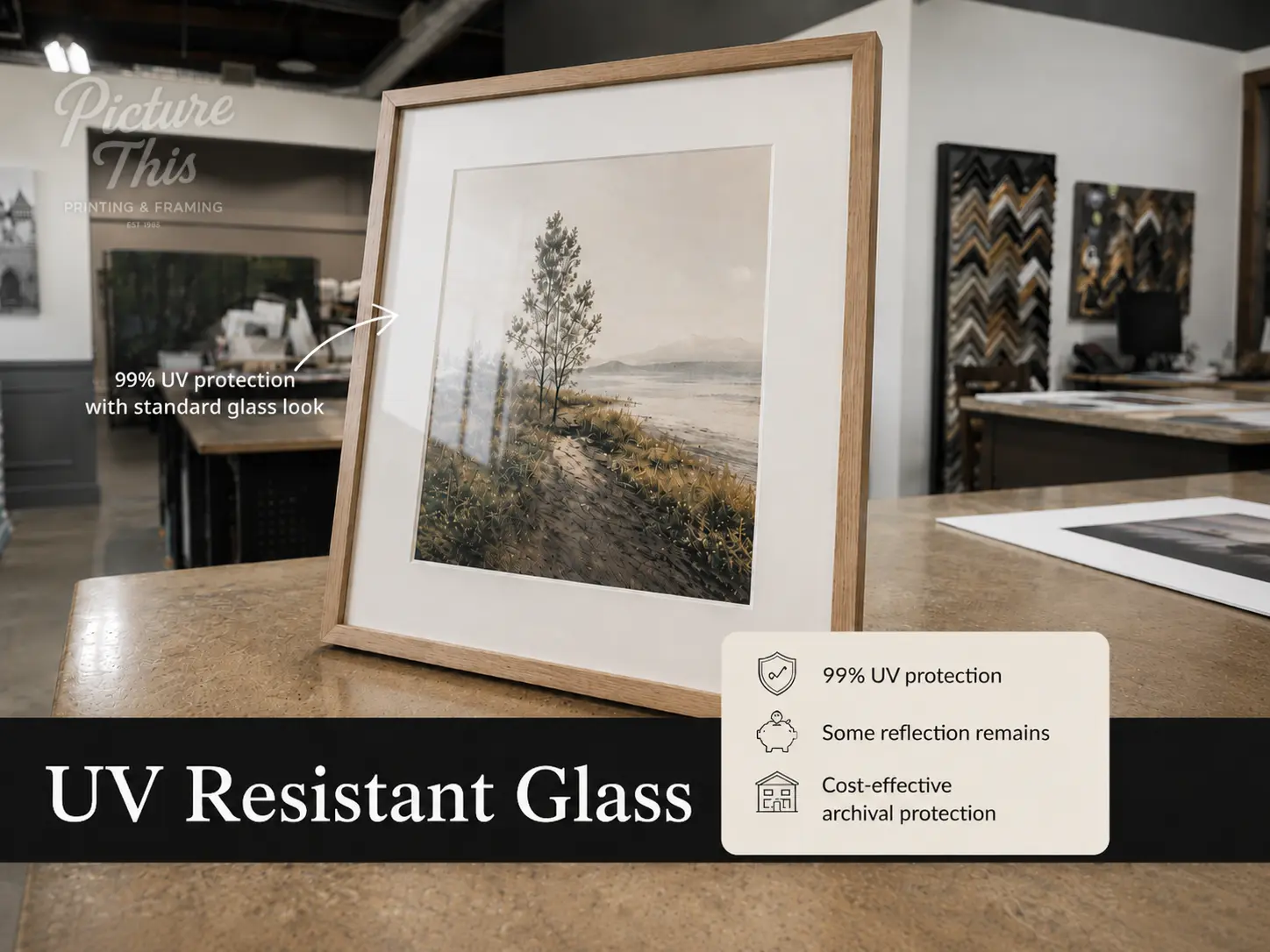
UV Resistant Glass adds a UV-filtering coating that blocks 99% of UV radiation while maintaining the same optical clarity as standard glass. It's the most cost-effective path to real UV protection in a glass format.
When to use it:
Mid-tier commercial projects where UV protection matters but anti-reflective properties aren't critical
Pieces hung on interior walls away from direct light sources
Budget-conscious projects that still require archival protection
Large-volume hotel programs where per-piece cost sensitivity is high
When to avoid it:
Pieces under spotlights or opposite windows (reflection will be visible)
High-traffic areas where shatter risk exists
Cruise ships, pediatric facilities, or any environment with safety glazing requirements
Claryl Museum Glass
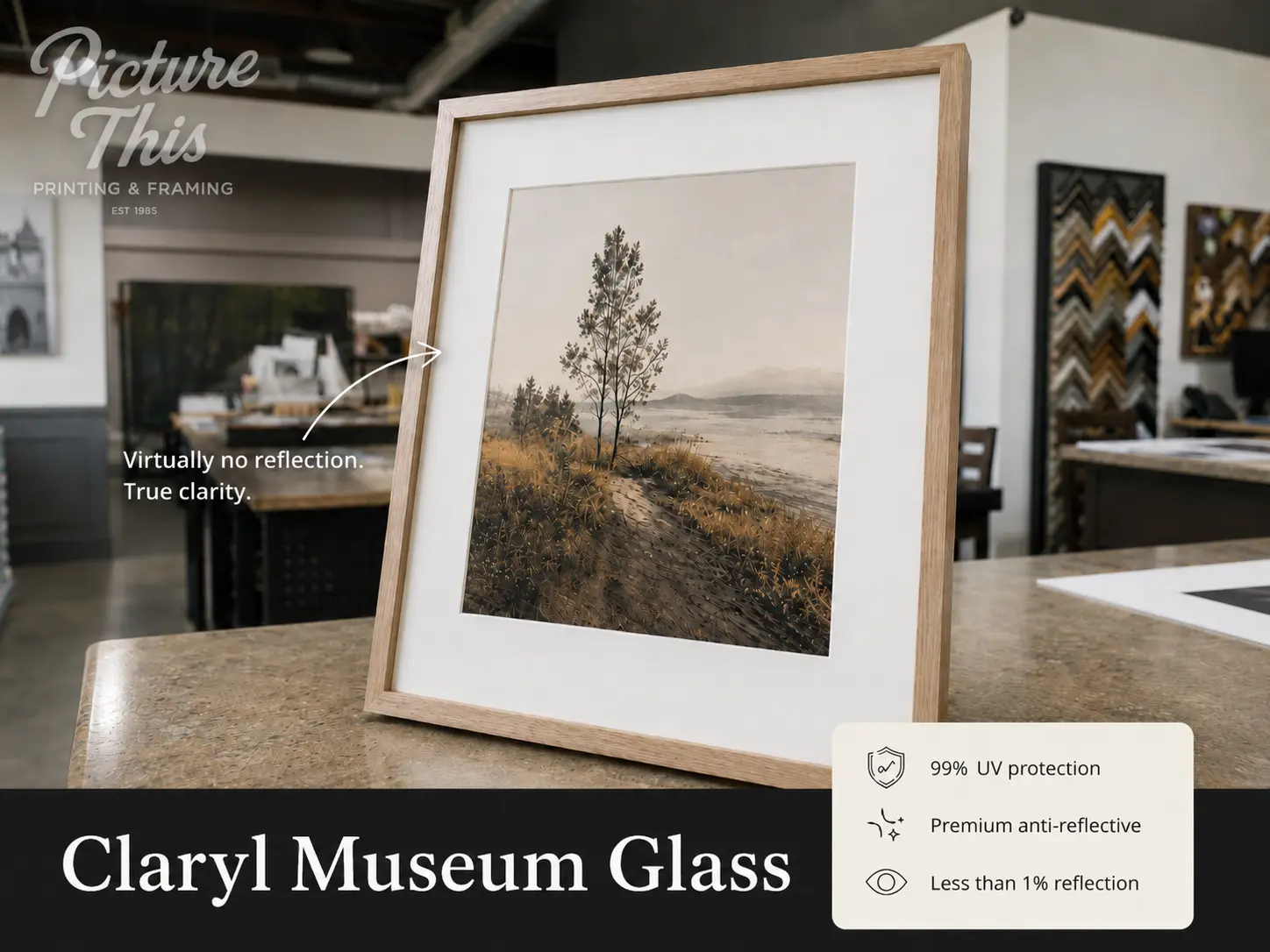
The premium standard. Museum Glass combines 99% UV protection with anti-reflective technology that reduces surface reflection to less than 1%. The result is glazing that appears nearly invisible — you see the artwork, not the glass.
When to use it:
Lobby statement pieces and executive environments
Gallery walls and focal artwork in high-visibility locations
Fine dining restaurants and upscale hospitality public spaces
Any piece where reflections from windows or lighting would compete with the artwork
Donor recognition walls and branded installations where presentation matters most
When to avoid it:
Guest room headboard walls (guests rarely notice reflection from bed)
Corridors where viewing angle varies and anti-reflective benefit is reduced
Environments where shatter-resistance is required
Volume programs where cost per piece is the primary constraint
Cost context: Museum Glass typically costs 3–5x standard glass at equivalent sizes. For a 24x36" piece, expect the glazing line to run $50–$70 versus $12–$18 for standard. On a 200-piece hotel program, that's a $7,000–$10,000 difference in glazing alone — which is why we recommend it selectively for high-impact locations rather than blanket-specifying it across an entire program.
Clear Acrylic
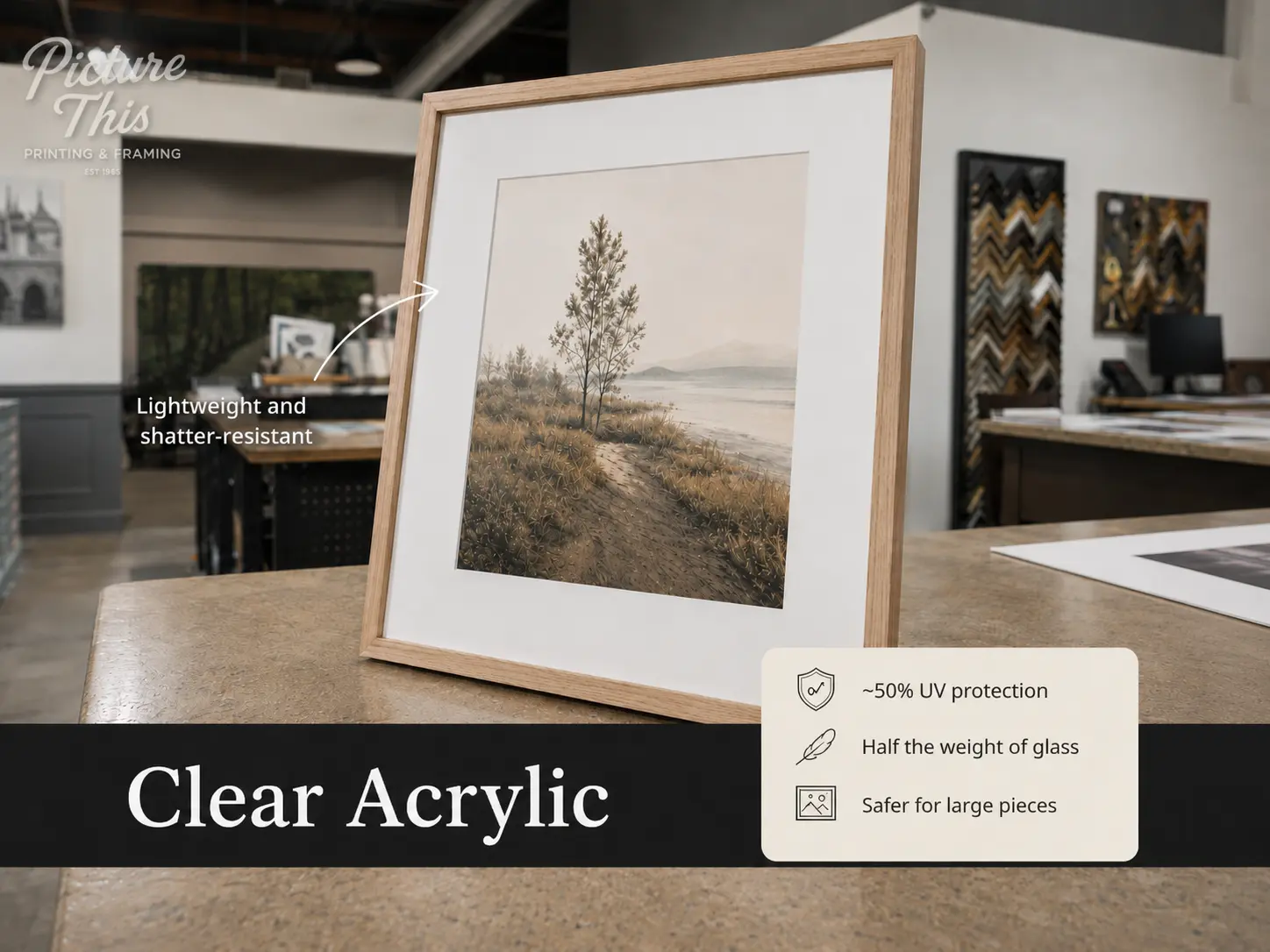
Acrylic is roughly half the weight of glass and virtually shatter-proof. It's the mandatory choice for cruise ships, the practical choice for oversized pieces, and increasingly common in commercial environments concerned about liability.
When to use it:
Oversized pieces where glass weight becomes a hanging concern
High-traffic corridors where impact risk exists
Cruise ships and maritime installations (required — glass is prohibited)
Pediatric and behavioral health environments
Seismic zones where shatter risk exists
Pieces hung at height where glass breakage would create a safety hazard
When to avoid it:
Premium focal pieces where optical perfection matters (acrylic can develop micro-scratches over time)
Areas requiring frequent cleaning with glass cleaners (many cleaning products damage acrylic)
Static-sensitive environments (acrylic attracts dust due to static charge)
UV OP3 Acrylic
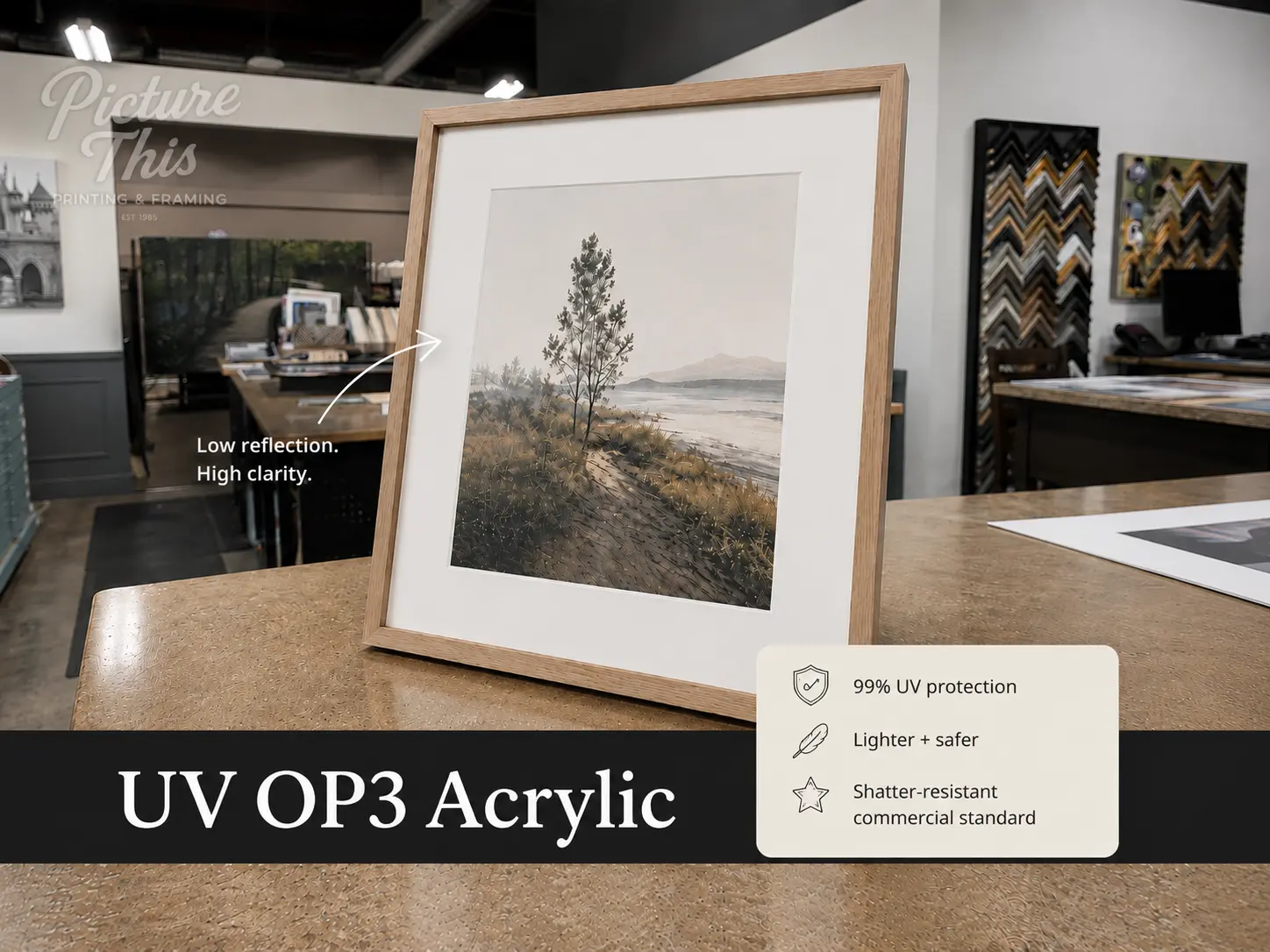
UV OP3 Acrylic is the commercial workhorse — lightweight acrylic with 99% UV protection built in. It combines the safety and weight advantages of acrylic with the UV protection of UV Resistant Glass. This is what we recommend most frequently for commercial programs.
When to use it:
The default recommendation for most commercial art programs
Hotel guest rooms and corridors (lightweight, safe, UV-protective)
Corporate offices where longevity and safety both matter
Healthcare patient areas (shatter-resistant, UV-protective, cleanable with proper products)
Any large-volume program where consistent protection at reasonable cost is the priority
When to avoid it:
Premium focal pieces where anti-reflective properties are worth the upgrade to Claryl Museum Glass
Environments where the piece will be cleaned frequently with ammonia-based products
This is our most-specified glazing for commercial work. The combination of 99% UV protection, half the weight of glass, shatter resistance, and moderate cost makes it the right answer for 60–70% of pieces in a typical commercial program.
Non-Glare Acrylic
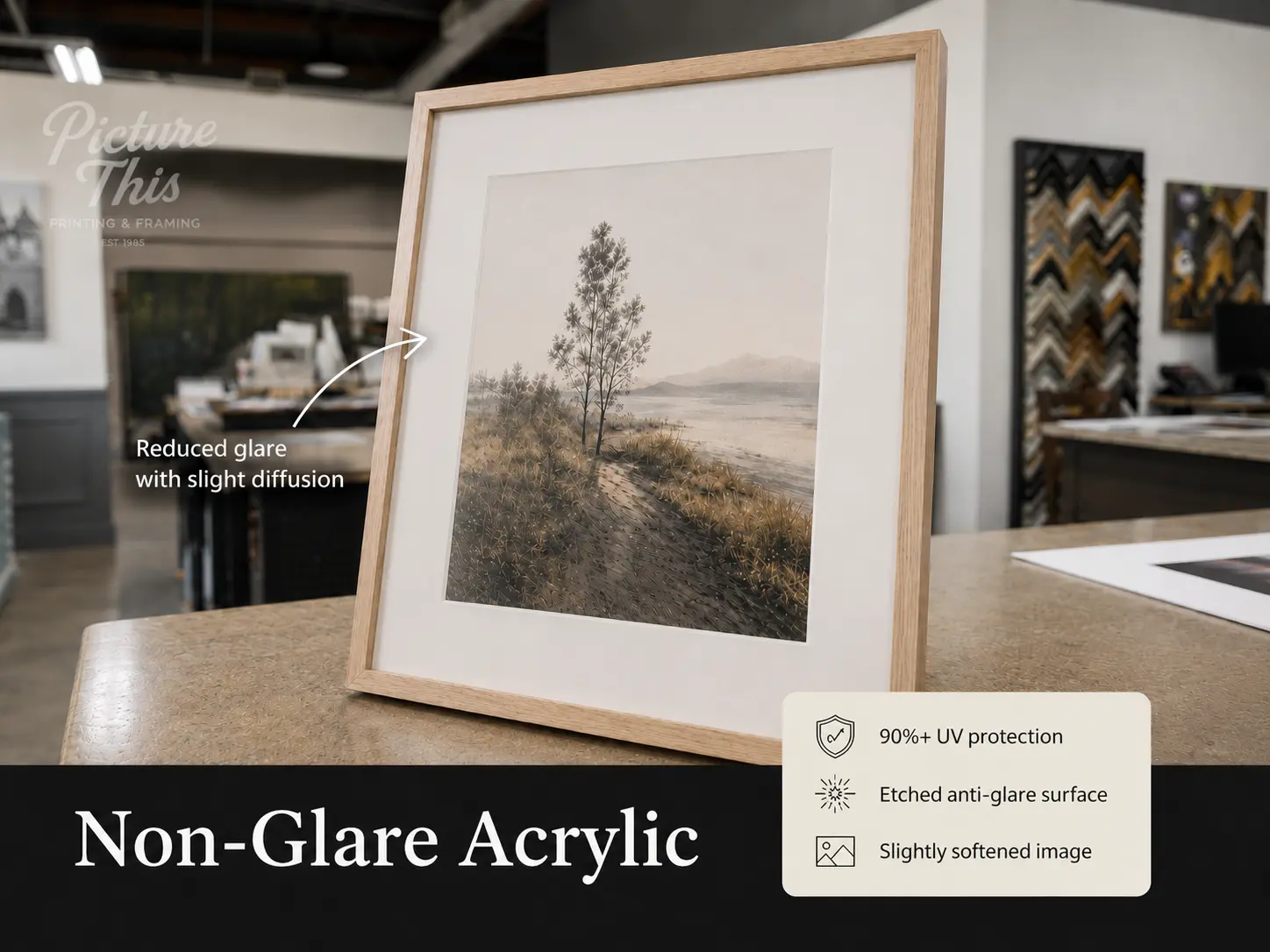
Non-glare acrylic uses an etched surface to diffuse light and reduce reflections. It reduces glare but introduces slight softening of the image — fine at normal viewing distance, noticeable up close.
When to use it:
Pieces hung directly opposite windows where reflection would be severe
Environments with strong overhead lighting that creates hot spots on flat glazing
Budget-conscious projects that need some glare reduction without the cost of Claryl Museum Glass
When to avoid it:
Detailed photography or fine art where image sharpness is critical
Pieces with significant mat reveal (the etched surface can create a hazy appearance over light-colored mats)
Very small pieces where the viewer is close enough to notice surface texture
Glazing Recommendations by Environment
Swipe to see all columns
| Environment | Recommendation | Upgrade | Notes |
|---|---|---|---|
| Hotel guest rooms | UV OP3 Acrylic | UV Resistant Glass | Weight and safety first |
| Hotel lobby | Claryl Museum Glass | — | Worth it for first impressions |
| Hotel corridors | UV OP3 Acrylic | Non-Glare Acrylic | Volume cost matters |
| Corporate reception | Claryl Museum Glass | — | Anti-reflective shines here |
| Corporate office | UV OP3 Acrylic | UV Resistant Glass | Protection + budget balance |
| Executive offices | Claryl Museum Glass | — | Presentation expected |
| Healthcare | UV OP3 Acrylic | — | Shatter-resistance required |
| Behavioral health | UV OP3 Acrylic | — | Shatter-proof only |
| Cruise ships | UV OP3 Acrylic | — | Glass prohibited |
| Restaurant dining | Claryl / OP3 mix | — | Mixed by visibility |
| Near windows | UV OP3 Acrylic | Claryl Museum Glass | 99% UV mandatory |
| Back-of-house | Clear Glass | UV Resistant Glass | Budget-appropriate |
Common Mistakes We See
Overspecifying Claryl Museum Glass Everywhere
Claryl Museum Glass is exceptional — but specifying it across a 300-piece hotel program adds $15,000–$25,000 versus UV OP3 Acrylic, while the anti-reflective benefit goes unnoticed in most locations. We recommend Claryl Museum Glass for 10–15% of pieces (lobbies, restaurants, statement locations) and UV OP3 Acrylic for the remaining 85–90%. For a full breakdown of how glazing fits into overall program budgets, see our Commercial Art Installation Cost Guide.
Underspecifying Near Windows
Clear Glass near south-facing or west-facing windows is the fastest way to destroy a print. We've seen artwork fade to near-blank within 18 months behind Clear Glass in a window-adjacent hotel room. The $8–$15 per piece upgrade to UV-filtering glazing pays for itself in avoided replacement costs within the first year.
Ignoring Weight on Large Pieces
A 40x60" piece with standard glass weighs over 25 lbs in glazing alone. Add the frame, mat, and print, and you're approaching 40–50 lbs. That requires heavier hardware, stronger wall anchors, and limits hanging flexibility. The same piece in UV OP3 Acrylic saves 12+ lbs — a meaningful difference for installation crews hanging hundreds of pieces.
Using Ammonia Cleaners on Acrylic
Windex and similar ammonia-based glass cleaners destroy acrylic over time, creating hazing and micro-cracks. Facilities teams need to know which pieces have acrylic glazing so housekeeping uses appropriate cleaners. We include care cards with all acrylic-glazed installations for this reason.
Frequently Asked Questions
Is museum glass or acrylic better for framing?
For most commercial pieces, UV OP3 acrylic is the better choice: 99% UV protection, shatter-proof, and less than half the weight of glass. Claryl Museum Glass adds anti-reflective clarity and is best for high-visibility focal pieces like lobbies and executive offices.
Is museum glass worth the cost?
In the right places. We recommend it for about 10 to 15% of a program, such as lobbies, restaurants, and statement locations. Specifying it across a 300-piece hotel program can add $15,000 to $25,000 versus UV OP3 acrylic, with the benefit going unnoticed in most locations.
How much UV does regular picture frame glass block?
Clear glass blocks only about 45% of UV, and clear acrylic about 50%. UV-resistant glass, Claryl Museum Glass, and UV OP3 acrylic all block 99%.
What glazing should be used near windows?
Always a 99% UV-filtering option, such as UV OP3 acrylic or Claryl Museum Glass. We have seen prints fade to nearly blank within 18 months behind clear glass in window-adjacent hotel rooms.
How do you clean acrylic picture frame glazing?
Never use ammonia-based glass cleaners like Windex, which cause hazing and micro-cracks over time. Use a cleaner made for acrylic and a soft cloth. See our custom framing services for all glazing options.
How We Help You Decide
At Picture This Framing in Fullerton, every commercial consultation includes a glazing recommendation based on your specific environments. We bring physical samples of each glazing type so you can see the optical difference under your actual lighting conditions — not showroom conditions.
For large programs, we typically recommend a walk-through of representative spaces to map glazing specifications by zone. The lobby focal piece gets a different spec than the corridor. The south-facing guest room gets a different spec than the interior conference room. That specificity is how you optimize the budget without compromising protection. If you're planning a hotel project, our complete hotel art installation guide covers the full process from concept through install.
Ready to Spec Your Glazing?
Whether you're quoting a new build, renovating an existing property, or replacing failed glazing on an aging art program, we can help you get the specification right the first time.
Call (714) 447-8749 or visit us at 631 S. State College Blvd, Fullerton, CA 92831. We keep all glazing options in stock for immediate sampling and can produce physical mockups for designer presentations.
For programs of 50+ pieces, we provide detailed glazing specifications mapped to your floor plan at no additional cost as part of our project management process. You can also request a quote online to get started.
Related Services
Industries We Serve
Questions About Your Project?
Our team in Fullerton is here to help with commercial art installations, custom framing, and museum-quality printing. Call us or request a quote to discuss your specific needs.