Hospitality Art Programs: What Hotels and Restaurants Get Wrong About Printing and Framing
From budget hotels to fine dining restaurants, the art on the walls says more about your brand than you think. A practical guide to hospitality art printing and custom framing that holds up to real-world commercial use.
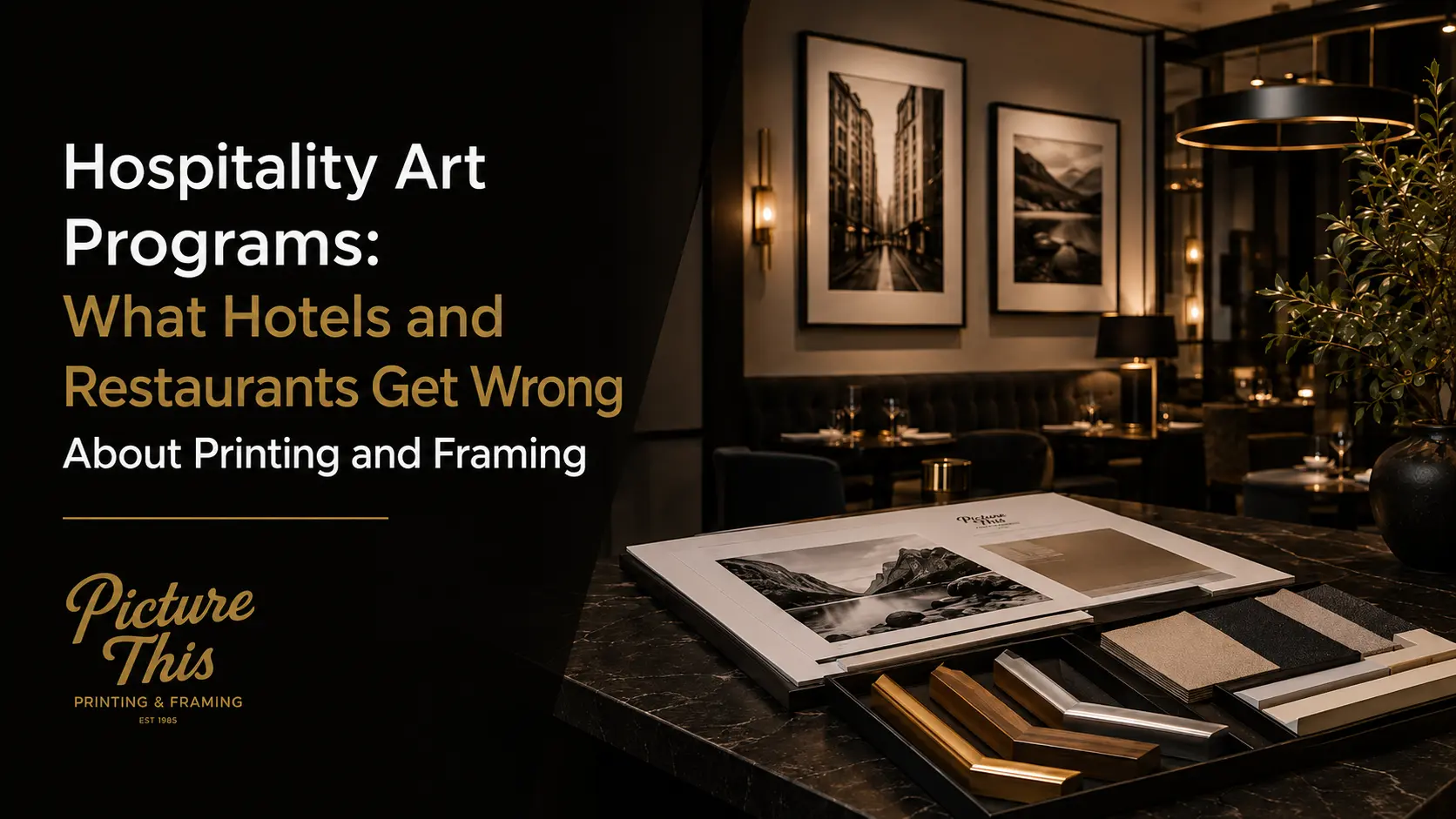
Walk into almost any hotel corridor or mid-range restaurant and you'll see it: art that looks like it was selected from a catalog, printed on budget stock, and framed in something that started warping within a year. No one talks about it, but guests notice it — even when they can't articulate why the space feels slightly off.
At Picture This Framing in Fullerton, CA, we've produced custom art programs for hospitality properties for over 40 years. This guide covers the most common mistakes we see in hotel and restaurant art programs — and what to do instead.
The Hospitality Art Problem Nobody Wants to Own
Here's the honest truth about how most hospitality art decisions get made: they happen late in the project, under budget pressure, and without anyone in the room who has real expertise in printing or framing. The result is art that looks fine on day one and mediocre by year two.
The consequences are more significant than most operators realize:
Faded prints read as neglect, not just aging
Warped frames in corridors signal poor quality to guests before they even reach their room
Generic imagery fails to differentiate your property or reinforce your brand story
Replacement costs for cheap materials often exceed what quality materials would have cost initially
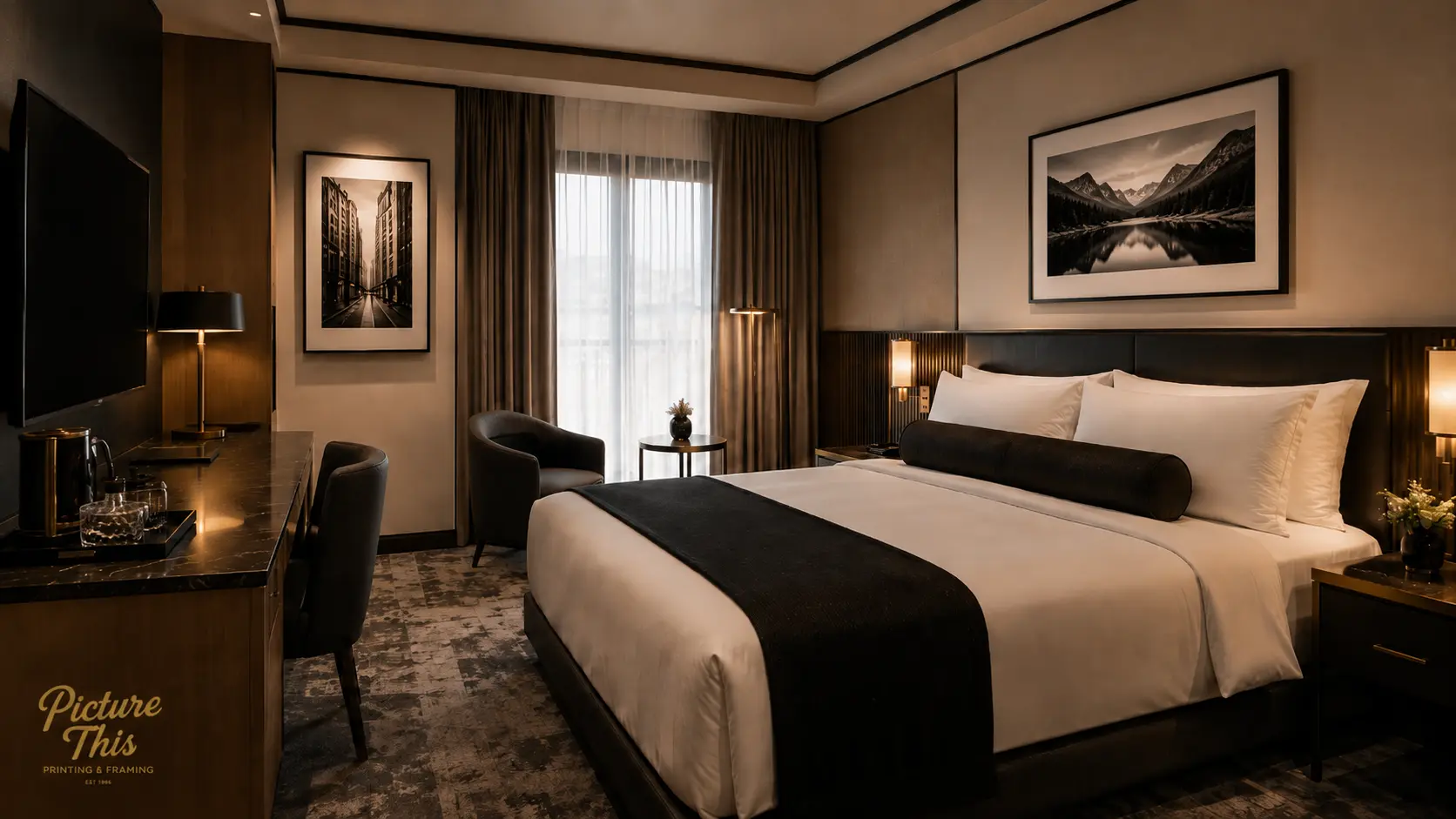
For hotels, the art program is one of the few brand touchpoints that guests interact with for hours — the piece above the headboard is the last thing they see before sleeping and the first thing they see in the morning. That's premium placement that deserves better than a $30 print-and-frame from a discount source.
What "Hospitality Grade" Actually Means
The phrase gets used loosely. When we talk about hospitality-grade printing and framing at our Fullerton facility, we mean materials and construction that survive:
High-humidity environments — pool areas, corridors with laundry cart traffic, restaurant kitchens nearby
Frequent housekeeping contact — frames get bumped, wiped down, and occasionally cleaned with inappropriate products
UV exposure from windows — particularly in south-facing guest rooms and restaurant dining rooms
Temperature cycling — spaces that run air conditioning aggressively create humidity swings that destroy unsealed wood frames
Long replacement intervals — a well-specified hospitality art program should last 7–10 years without looking tired
Printing: Why Archival Inks Are Not Optional
Dye-based inks fade. They look fine at the time of printing and begin visibly losing color within 3–5 years of light exposure — sometimes faster near windows. For a hotel spending $150–500 per guest room on art, using dye-based prints is a false economy.
We use archival pigment inks exclusively for all hospitality work. The difference:
For restaurant environments with strong artificial lighting that runs 12–16 hours daily, pigment inks are especially critical. Track lighting and recessed downlights accelerate fade on dye-based prints noticeably faster than hotel rooms with more diffuse natural light.
Paper and Canvas Selection for Hospitality
The right substrate depends on the environment:
Fine art paper for restaurants and lobbies: Matte and velvet papers create a sophisticated, gallery-like quality appropriate for upscale dining rooms and hotel lobby focal pieces. We work with premium papers that can handle frameless float mounting or traditional window mat presentation.
Canvas for casual hospitality environments: Canvas prints with proper varnish are excellent for restaurants and hotel public spaces where a relaxed, warm aesthetic fits the brand. A gallery-wrapped canvas with UV-protective varnish is also lighter than a framed piece — an advantage for high-volume corridor installations.
Luster and metallic papers for statement pieces: Certain hospitality design concepts benefit from the visual depth of metallic substrates — particularly in contemporary bars, hotel spas, and modern lobby environments.
Custom Framing for Hotels: The Details That Matter
Frame Material Selection by Environment
Not every frame profile works in every hospitality context. Here's how we think about it:
High-humidity areas (pool corridors, spa areas, some restaurant back-of-house adjacencies): Use aluminum frames or sealed composite mouldings. Solid wood in these zones will show moisture damage within months.
Guest room headboard walls: Warm wood tones or neutral metals work across most design schemes. The priority is consistency — all rooms at the same brand tier should feel cohesive even if imagery varies.
Restaurant dining rooms: Frame selection should reinforce the dining concept. A steakhouse with dark wood millwork benefits from deep, heavy profiles; a fast-casual concept might call for simple metal or thin natural wood. Frame choice is part of the brand expression, not a separate decision.
High-traffic corridors: Durability is the top consideration. Frames get clipped by luggage carts, cleaning equipment, and housekeeping trolleys. We recommend robust profiles with corner protection and hanging systems that keep pieces secured even after contact.
Glazing Options for Hospitality Environments
The glazing decision is often made without enough consideration. Options and when to use them:
Museum anti-reflective glass: The premium choice for lobby focal pieces, executive dining rooms, and upscale hotel public spaces. Nearly invisible, it lets the artwork speak without reflective distraction. Worth the cost in high-visibility locations.
UV-filtering acrylic: Our recommendation for guest room headboard pieces and most corridor work. Lightweight (important at volume), shatter-resistant (important in occupied spaces), and UV-protective. Significantly lighter than glass, which matters when you're hanging 200+ pieces.
Standard glass: Cost-effective for back-of-house framed certifications, employee areas, and low-risk locations. Not recommended for guest-facing areas in quality properties.
Restaurant Wall Art: A Different Set of Challenges
Hotels and restaurants share some requirements but differ in important ways. Restaurants present unique challenges that purely hotel-focused vendors sometimes underestimate.
The Kitchen Proximity Problem
Kitchens generate grease aerosols, humidity, and heat that penetrate into dining areas. Art near kitchen pass-throughs or open kitchen concepts needs:
Sealed frames — open-back frames allow grease infiltration over time
Wipeable glazing — acrylic or glass that can be cleaned without damaging the finish
Varnished canvas if going frameless — varnish provides a cleanable, protective surface
Lighting Is More Aggressive in Restaurants
Track lighting in fine dining and recessed downlights in casual dining run at intensities that accelerate fading. Restaurant operators who invest in quality art and then light it with unfiltered halogen or older LED fixtures are undermining their investment. We advise clients on lighting requirements alongside print and frame selection — the two decisions are interconnected.
High Turnover Means More Handling
Restaurants see more physical interaction with wall art than hotels. Staff lean against walls during service, art gets bumped during furniture rearrangement for private dining events, cleaning staff wipe down everything. Durability and mounting security matter more in food service environments than in guest rooms.
The Case for Custom vs. Off-the-Shelf Hospitality Art
Pre-packaged hospitality art programs exist for a reason: they're convenient. You can select from a catalog of pre-licensed imagery, order standard sizes, and receive a complete program without artwork development decisions.
The problem is differentiation. Every hotel using the same catalog sources ends up with art that guests have seen before — in another property by the same brand or a competitor in the same tier. In a market where experience differentiation increasingly drives preference, generic art is a missed opportunity.
Custom programs — even modest ones built around licensed regional photography, local artist partnerships, or brand-specific commissioned illustration — create memorable environments that generic catalogs can't replicate.
At our Fullerton facility, we help hospitality clients develop custom programs from concept through installation. We work with:
Licensed photography with negotiated usage rights at commercial scales
Local artist partnerships for properties seeking authentic regional identity
Original commissioned artwork for flagship locations and statement pieces
Brand-specific conceptual development for hospitality groups building consistent identity across multiple properties
Scaling From One Property to a Portfolio
Single-property operators and portfolio managers have different needs from a framing and printing partner.
For individual properties, the priority is getting the right solution for the specific environment — brand alignment, material selection appropriate to the space, and a production partner who can deliver consistent quality on a defined timeline.
For multi-property operators and hospitality groups, the additional priorities are:
Brand consistency across locations: The same frame profile and finish needs to be available for property #7 that was used for property #1. This requires a vendor with deep, stable inventory — not a vendor who sources materials project-by-project and can't guarantee matching materials a year later.
Volume pricing that reflects the relationship: Portfolio programs deserve commercial pricing that reflects total relationship volume, not per-property transactional pricing.
Production documentation for future reorders: Inevitably, pieces get damaged or need replacement. Vendors who maintain production records make reorders straightforward; vendors who don't require starting from scratch.
Our Fullerton facility maintains production documentation for every commercial project we've completed. For hospitality groups we work with on an ongoing basis, replacement pieces can be produced to exact match specification without re-proofing.
What a Good Hospitality Art Project Looks Like
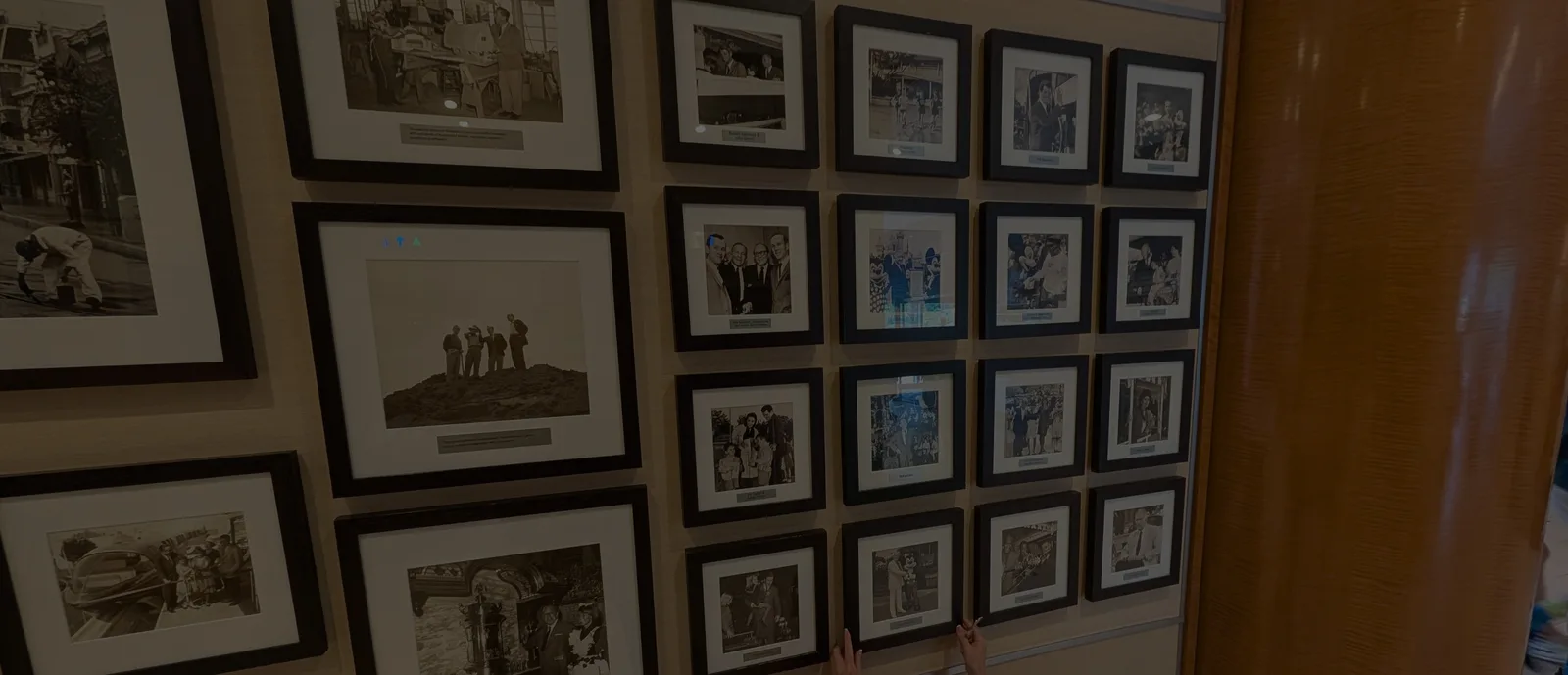
To make this concrete: a mid-scale 90-room hotel in Orange County recently engaged us for a complete guest room and public space art program. The project involved:
120 guest room headboard pieces (two alternating images, consistent framing across all rooms)
40 corridor pieces across three floors (graduated sizing creating visual rhythm)
Four lobby focal pieces (larger scale, statement treatment)
Eight pieces for the hotel restaurant (thematic imagery coordinating with the dining concept)
Materials selected: Archival pigment prints on premium luster paper, UV-filtering acrylic glazing, sealed wood composite frames in a warm medium profile consistent across all guest and corridor pieces, aluminum profile for the restaurant (moisture-appropriate for the environment).
Timeline: Six months from first consultation to installation-ready delivery, including two rounds of physical sampling for designer review.
Outcome: Complete program installed two weeks before opening, all pieces labeled room-by-room for GC-managed installation, zero reprints required.
That's what a well-managed hospitality art program looks like at commercial scale.
Frequently Asked Questions
What does hospitality-grade art mean?
It means printing and framing built to survive humidity, frequent housekeeping contact, UV exposure from windows, and temperature swings, while lasting 7 to 10 years without looking tired.
Why do hotel and restaurant prints fade?
Most fading comes from dye-based inks, which can visibly lose color within 3 to 5 years of light exposure, faster near windows or under strong restaurant lighting. Archival pigment inks are rated for 100+ years under normal display conditions.
What glazing is best for hotel guest rooms?
UV-filtering acrylic is the usual recommendation for guest room headboard pieces and corridors because it is lightweight, shatter-resistant, and UV-protective. Museum anti-reflective glass is best reserved for lobby focal pieces and other high-visibility spots. Compare all options in our UV glazing guide.
What frames work in humid hospitality areas?
Use aluminum frames or sealed composite mouldings near pools, spas, and kitchens. Solid wood in these zones can show moisture damage within months.
How do restaurants protect art near the kitchen?
Use sealed frames so grease cannot get in through the back, wipeable acrylic or glass glazing, and varnished canvas if the piece is frameless. Lighting also matters, because strong track and downlights speed up fading.
Ready to Talk About Your Hospitality Project?
Whether you're opening a new restaurant, renovating a hotel, or managing a portfolio of hospitality properties, we'd welcome a conversation about what your specific project requires.
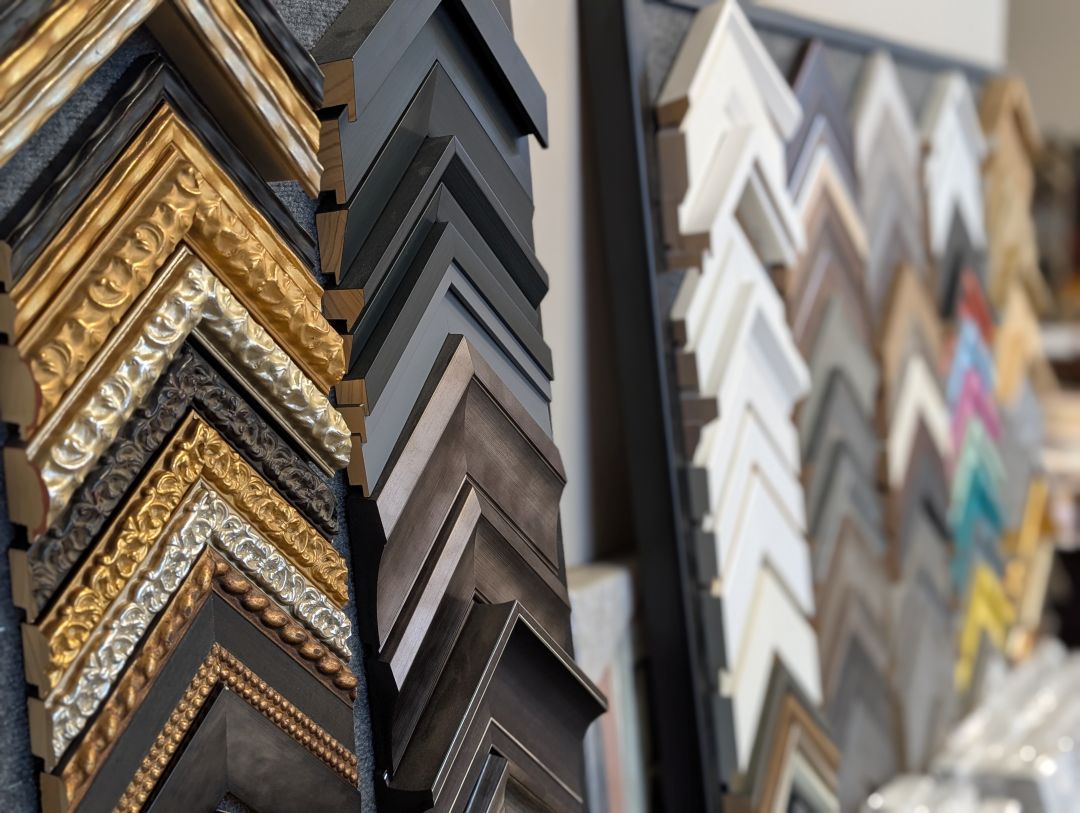
Call (714) 447-8749 to speak directly with our commercial team. We're located at 631 S. State College Blvd, Fullerton, CA 92831 — just north of Disneyland in Orange County — and we welcome in-person consultations where you can review our full moulding library, paper and canvas samples, and examples of completed hospitality work.
For projects requiring 50+ pieces, we provide dedicated project management at no additional cost and volume pricing that reflects the scale of your program.
Related Services
Industries We Serve
Questions About Your Project?
Our team in Fullerton is here to help with commercial art installations, custom framing, and museum-quality printing. Call us or request a quote to discuss your specific needs.