Wood vs. Metal vs. Composite Moulding for Commercial Framing: Durability, Cost & Maintenance in High-Traffic Spaces
Wood vs. metal vs. composite frame moulding compared for commercial art programs. Durability, cost at volume, and total ownership for hotels, offices, healthcare, and cruise ships.
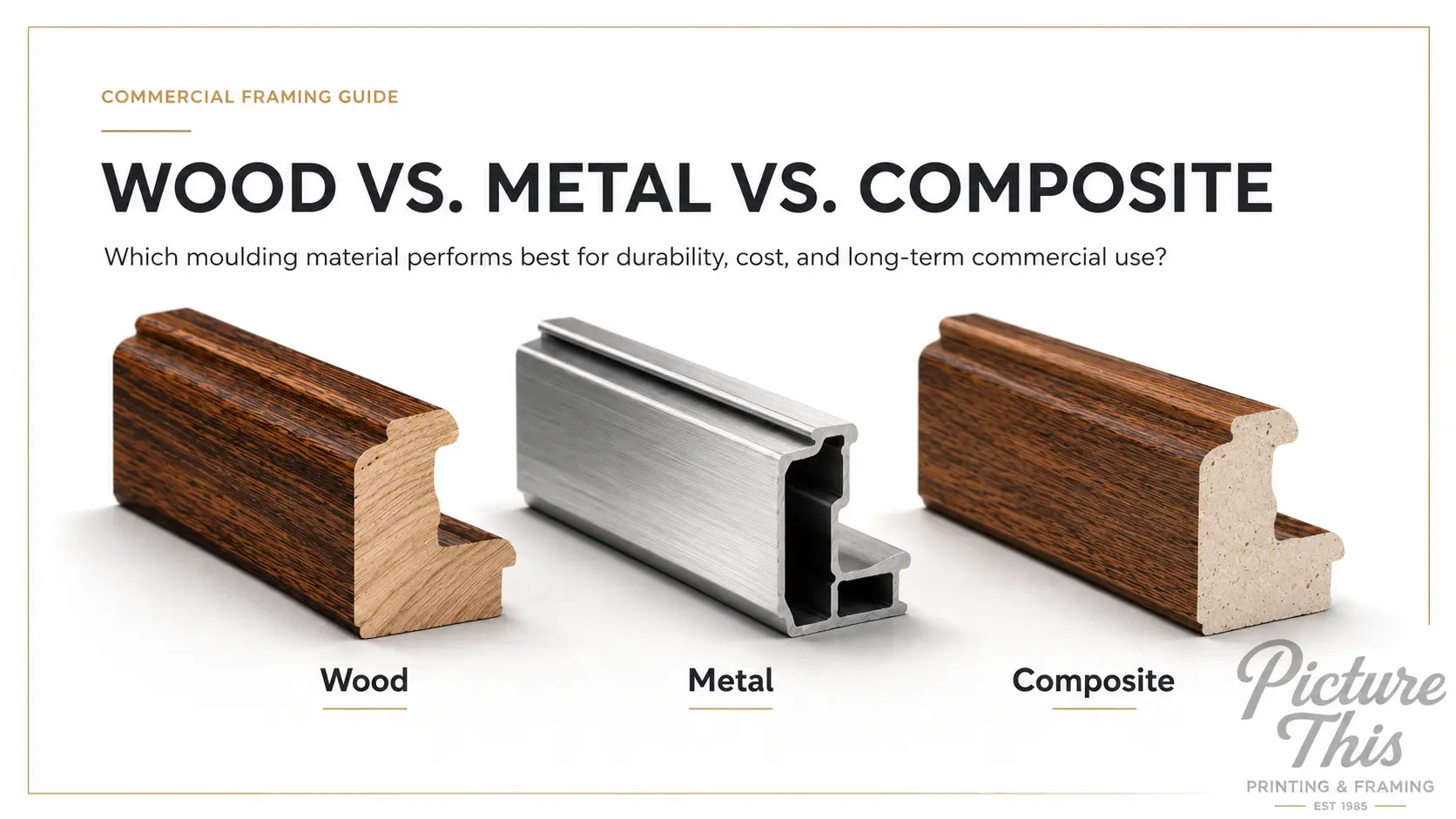
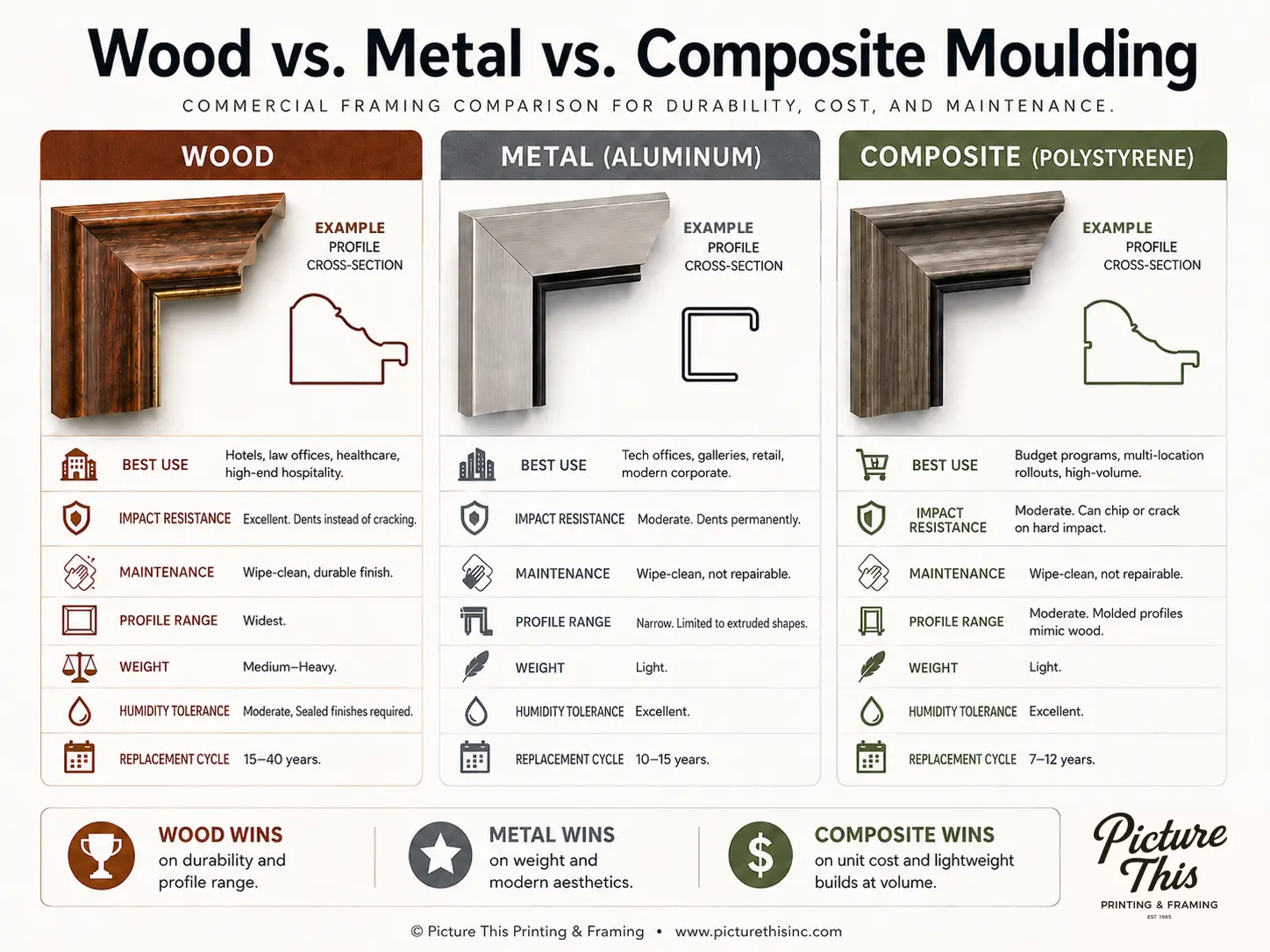
The short answer: Wood wins on durability, profile range, and longevity for most commercial environments. Metal wins on weight and modern aesthetics. Composite wins on unit cost and lightweight builds at high volume. But the right answer depends on your environment, your replacement cycle, and total cost of ownership over the wall-life of the program — not the price per stick.
Why This Decision Matters More Than Unit Price
Moulding is a top line-item driving installed cost on any commercial art program. But the purchase price is only the beginning. A frame that cracks from a housekeeping cart, warps from HVAC humidity swings, or needs full replacement when scuffed will cost you again in labor, logistics, and program inconsistency three to five years after install.
Consumer framing content compares materials by appearance. This guide compares them by what actually matters in commercial environments: impact resistance, cleanability, longevity, lead-time reliability, and ten-year total cost of ownership across programs of 1 to 5,000+ identical units.
The Comparison: Wood vs. Metal vs. Composite at a Glance
Swipe to see all columns
| Factor | Wood | Metal (Aluminum) | Composite (Polystyrene) |
|---|---|---|---|
| Best use | Hotels, law offices, healthcare, high-end hospitality | Tech offices, galleries, retail, modern corporate | Budget programs, multi-location rollouts, high-volume |
| Impact resistance | Excellent — dents but doesn't crack | Moderate — dents permanently | Moderate — can chip or crack on hard impact |
| Maintenance | Wipe-clean, durable finish | Wipe-clean, not repairable | Wipe-clean, not repairable |
| Profile range | Widest — hundreds of widths and styles | Narrow — limited to extruded shapes | Moderate — molded profiles mimic wood |
| Cost at 500+ units | $ – $$ (species-dependent) | $ – $$ | $ – $ |
| Replacement cycle | 15–40 years | 10–15 years (replace on damage) | 7–12 years (replace on damage) |
| Weight | Medium–Heavy | Light | Light |
| Humidity tolerance | Moderate (sealed finishes required) | Excellent | Excellent |
| Custom mill capability | Yes — any profile | Limited to stock extrusions | Limited to stock molds |
Wood Moulding: The Commercial Workhorse
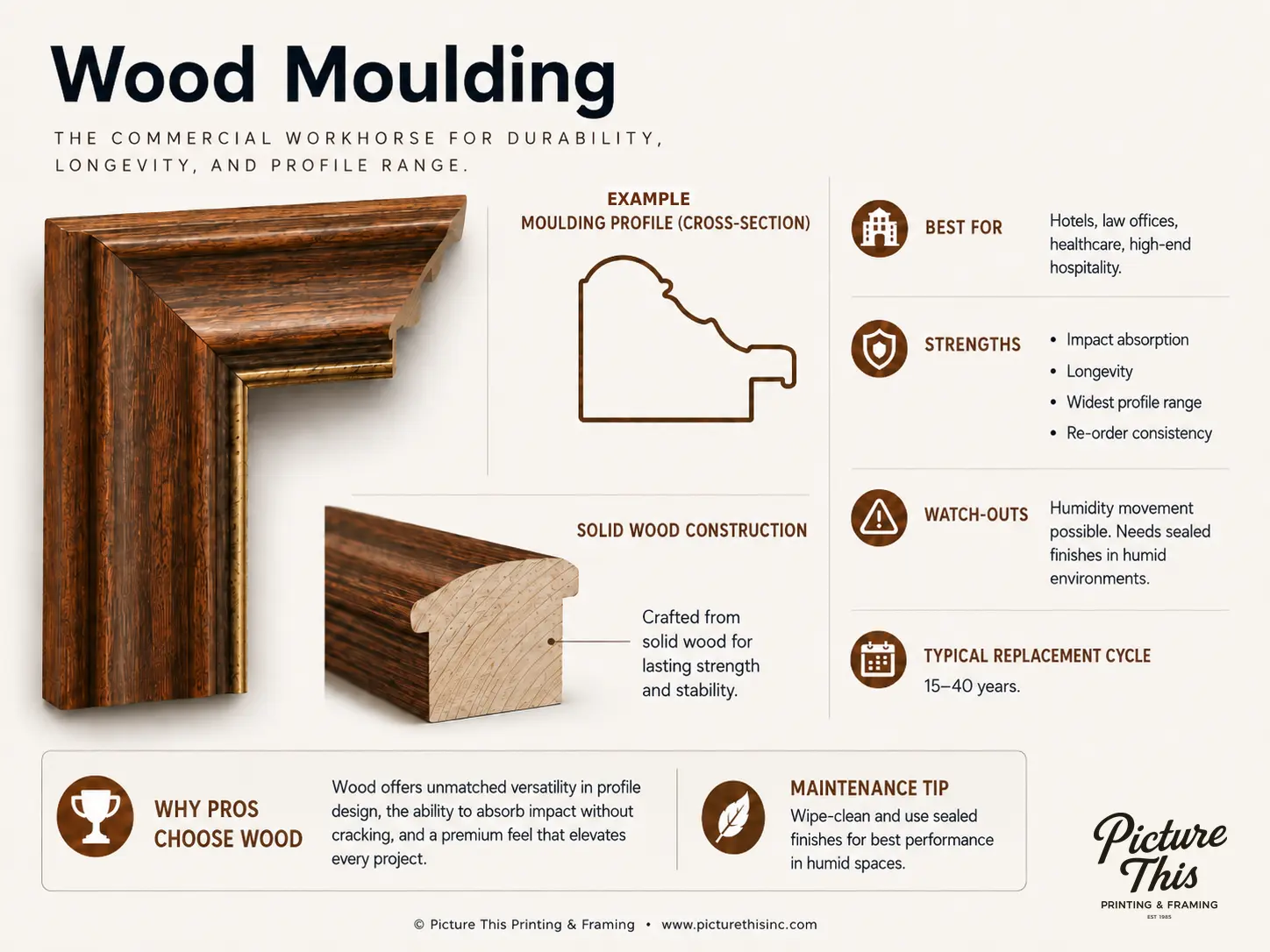
Wood remains the dominant material for hotel, healthcare, and high-end commercial programs — and it's not sentiment. It's engineering.
Why wood wins in high-traffic commercial:
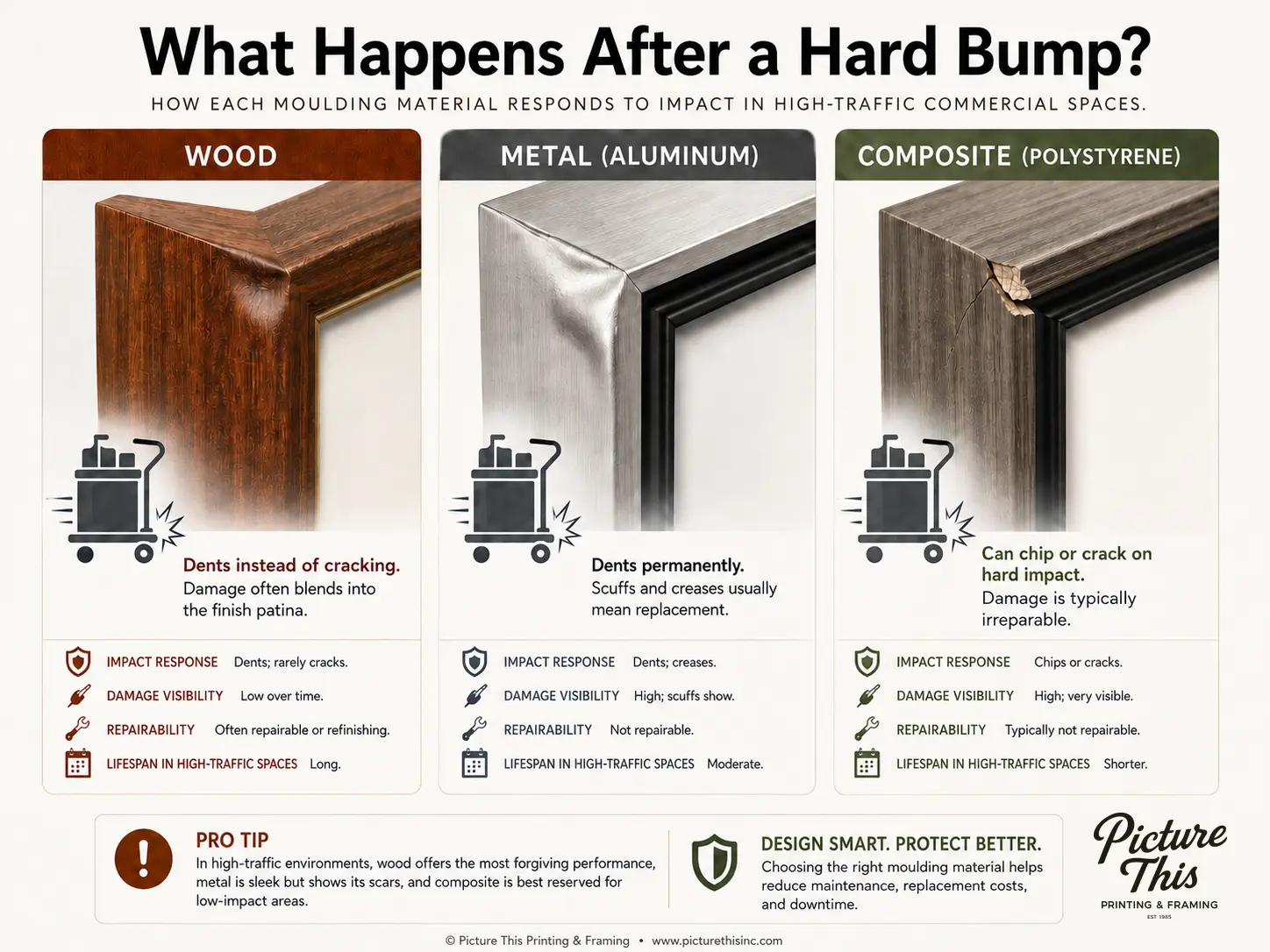
Impact absorption. A housekeeping cart bumps a wood frame and creates a shallow dent that blends with the finish patina. The same impact cracks a composite frame or permanently creases aluminum.
Longevity. A properly finished hardwood frame holds up for decades in commercial environments without visible degradation. Catalyzed lacquer finishes resist scuffs, cleaning chemicals, and UV yellowing far longer than any composite coating.
Profile range. Our Fullerton moulding library carries hundreds of wood profiles — from 3/4-inch contemporary to 5-inch ornate — in finishes from raw ash to high-gloss lacquer. No other material matches this range.
Repeatability. Because we mill and finish in-house, we guarantee lot-to-lot consistency from one piece to 5,000+. Re-orders five years later match the originals because we cut from the same stock and apply the same finish formula.
Where wood requires care:
Wood moves with humidity. In sealed, climate-controlled commercial interiors this is irrelevant. On cruise ships or in high-humidity healthcare wash areas, wood needs sealed-back builds and marine-grade lacquer to prevent warping. We spec these builds routinely for maritime clients, but it adds cost and production time versus metal or composite.
Best wood species for commercial volume:
Basswood / Obeche: Lightweight, stable, accepts stain uniformly. Our most-specified species for hotel programs.
Ash: Open grain, contemporary aesthetic. Excellent for natural and whitewash finishes.
Maple: Hard, tight grain, resists dents. Best for healthcare and high-traffic corridors.
Oak: Traditional authority. Heavy but nearly indestructible. Ideal for law firms and boardrooms.
Metal (Aluminum) Moulding: Light, Modern, Limited
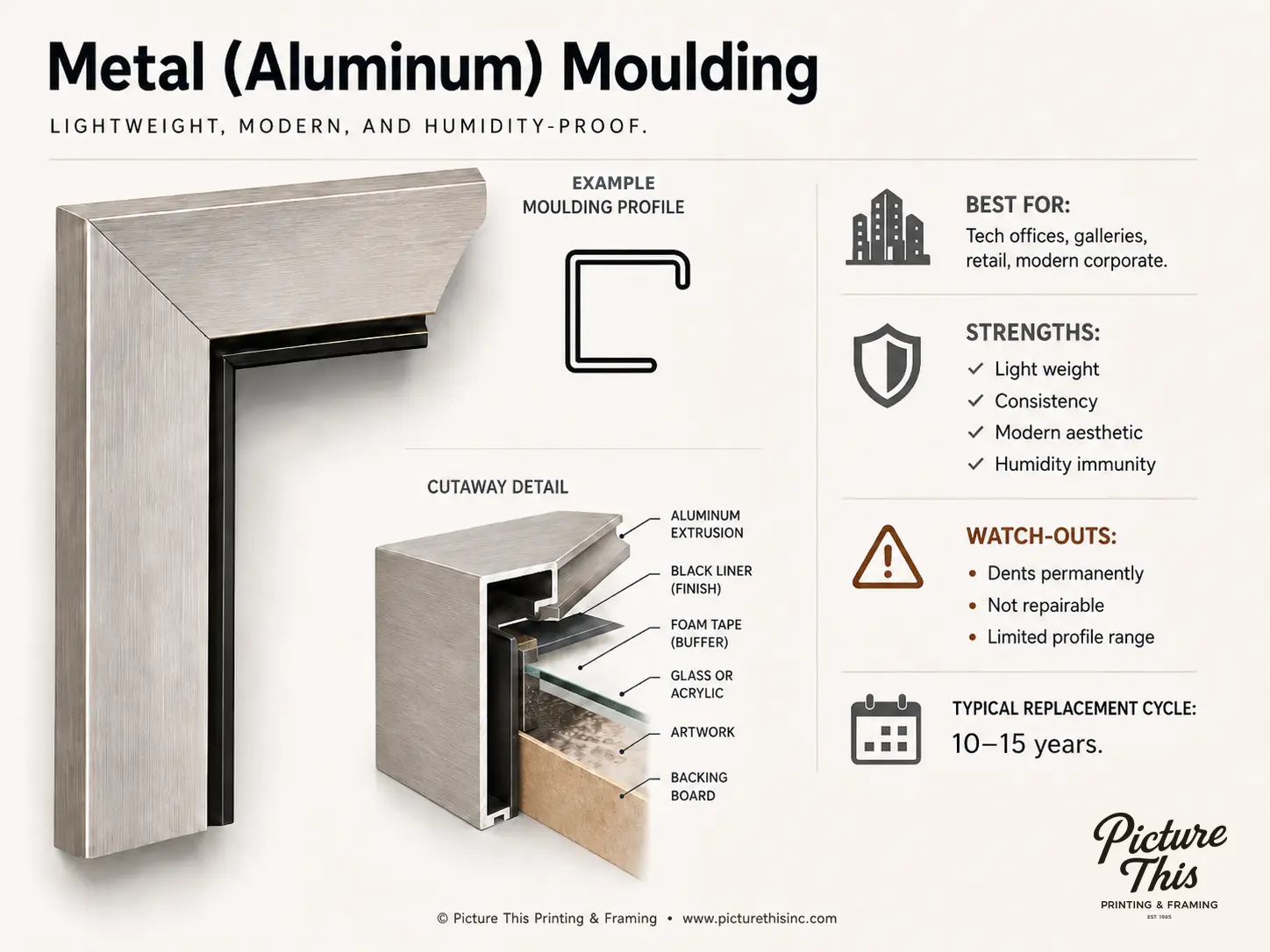
Extruded aluminum frames dominate contemporary corporate offices, galleries, and retail environments where weight, line, and cost predictability matter.
Where metal excels:
Weight. Aluminum frames weigh 40–60% less than equivalent wood builds. For oversized pieces or drywall-hung installations where stud-finding is impractical, lighter frames mean simpler hardware.
Consistency. Extrusion guarantees identical dimensions across any quantity. No grain variation, no finish drift between lots.
Modern aesthetic. Thin black, silver, or brass profiles read "gallery" and "tech" — which is exactly why Irvine tech campuses and Downtown LA agencies spec them.
Humidity immunity. Aluminum doesn't expand, contract, or warp in any climate. No back-sealing required.
Where metal fails:
Repairability. Anodized finishes cannot be touched up. A dent, scratch, or scuff on an aluminum frame means replacement — full stop. In hotel corridors where cart strikes are inevitable, this makes metal a poor long-term choice.
Profile range. Extruded profiles are limited to what dies exist. You get slim, medium, and deep — but not ornate, not tapered, not hand-carved. If the design requires anything beyond clean lines, metal is out.
Cold read. In healthcare, hospitality, and residential-adjacent environments, aluminum reads clinical. It works in galleries and tech offices but fights the warmth most hotels and medical facilities want.
Composite Moulding: Lightweight, Low-Cost, High-Volume
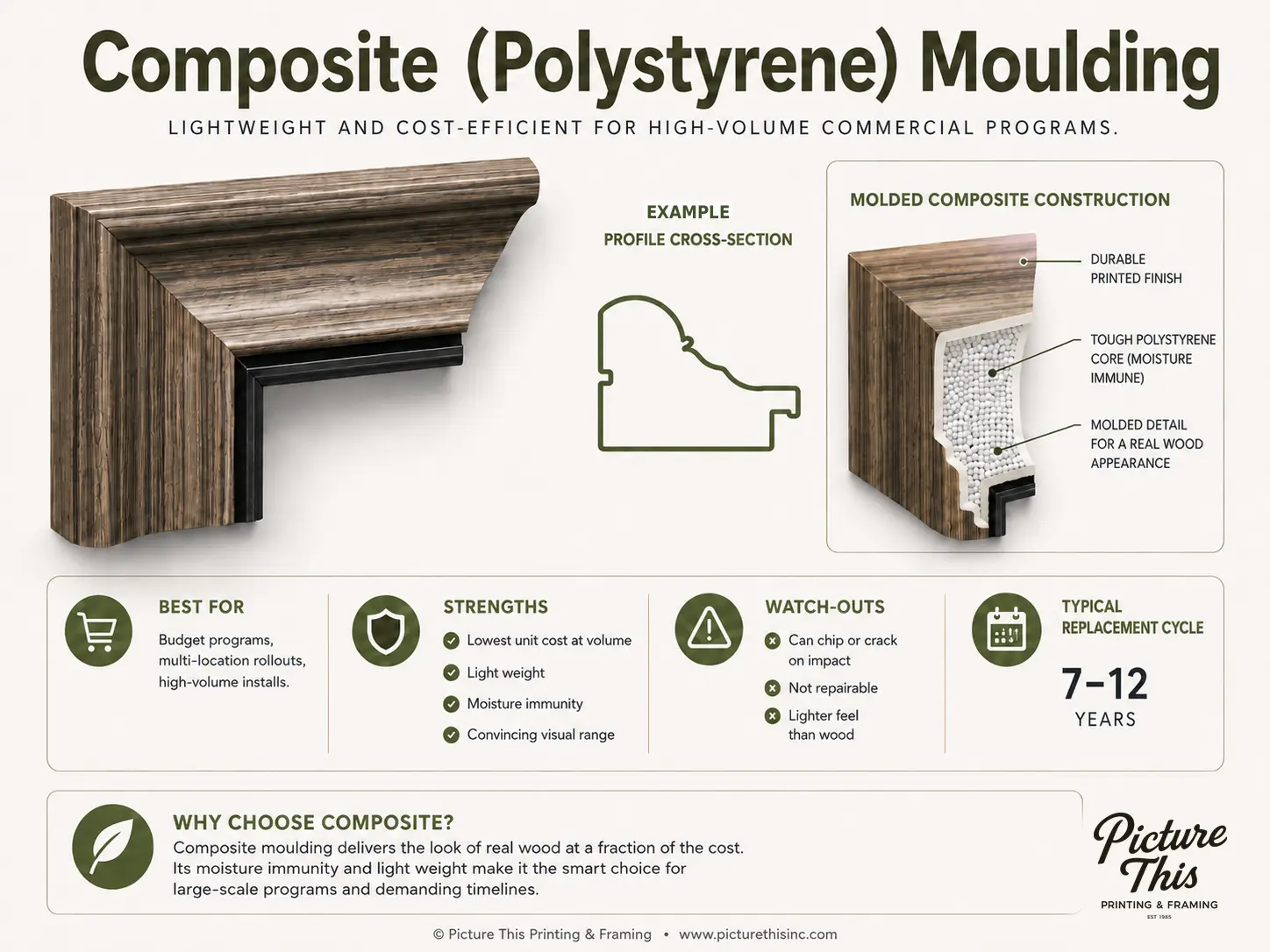
Composite frames — typically extruded from recycled polystyrene (sometimes called "poly" or styrene in the trade) — fill a large and growing niche: high-volume programs where unit cost and weight are the primary constraints.
Where composite works:
Unit cost. At 500+ pieces, polystyrene moulding costs 30–50% less per linear foot than equivalent wood profiles. For budget-constrained programs where the owner plans to replace at the next renovation cycle anyway, that savings compounds across hundreds of rooms.
Weight. Polystyrene composite is significantly lighter than wood — closer to aluminum in handling weight. That means simpler hardware, faster installation, and lower shipping costs on high-volume orders.
Moisture immunity. Poly doesn't absorb moisture at all. In humid environments without tight climate control, composite holds dimensional stability indefinitely where unsealed wood would move.
Visual range. Modern molding and finishing technology produces polystyrene profiles that mimic wood grain, metallic finishes, and painted textures convincingly at arm's length. For corridor applications where viewers pass at speed, the visual compromise is minimal.
Sustainability angle. Most polystyrene moulding is manufactured from recycled plastic, which resonates with LEED-tracking projects and ESG-conscious corporate buyers.
Where composite has limits:
Impact resistance. On a hard strike, polystyrene can chip or crack in a way that's immediately visible and irreparable — no touch-up, only replacement. Wood absorbs the same impact with a dent that blends into the patina.
Weight and feel. Poly is noticeably lighter in the hand than solid wood. For most wall-hung applications that's a non-issue — and in many cases a benefit — but designers evaluating samples side-by-side will feel the difference. Once on the wall, finished polystyrene and wood frames can receive the same coatings and look virtually identical at normal viewing distance.
Recommendations by Vertical
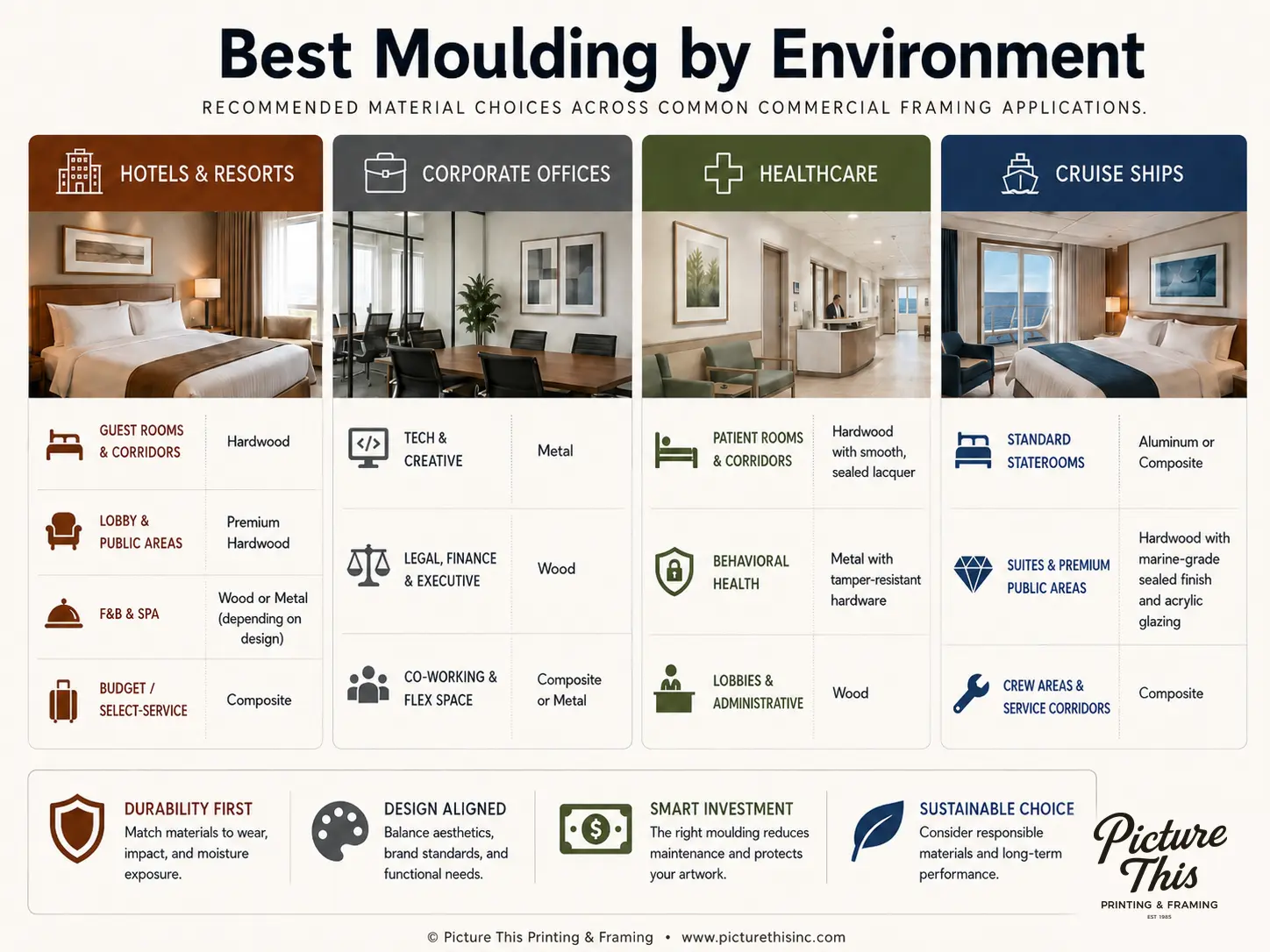
Hotels & Resorts (PIP-Cycle Thinking)
Hotel art programs live on Property Improvement Plan cycles — typically 7–12 years between soft-good refreshes. The frame needs to look fresh at the end of that cycle, not just at install.
Guest rooms and corridors: Hardwood (basswood or maple) with catalyzed lacquer finish. Survives cart strikes and daily housekeeping wipe-downs for the full PIP cycle without showing wear.
Lobby and public areas: Premium hardwood (ash, walnut, or custom-milled profiles) with hand-applied finish. This is your first-impression moment — invest here.
F&B and spa: Wood or metal depending on design direction. Sealed backs for any kitchen-adjacent or high-humidity placement.
Budget tier / select-service: Composite is acceptable for brands with 5–7 year refresh cycles where ownership expects full art replacement at each PIP.
Corporate Offices
Tech and creative: Metal. Clean lines match the environment, pieces rarely take impact, and the weight savings matter on large-format installations.
Legal, finance, executive: Wood. Authority, warmth, and the "built to last" signal these environments demand.
Co-working and flex space: Composite or metal. High turnover environments with frequent reconfiguration benefit from lightweight, replaceable framing.
Healthcare (Cleanability Is the Priority)
Patient rooms and corridors: Hardwood with smooth, sealed lacquer. Must survive daily wipe-down with hospital-grade disinfectants without finish degradation.
Behavioral health: Metal with tamper-resistant hardware. Frame must not shatter or produce sharp edges on impact.
Lobbies and administrative: Wood. Same spec as corporate — warmth and perceived quality for first impressions.
Cruise Ships (Motion + Humidity + Regulations)
Standard staterooms: Aluminum or polystyrene composite. Weight limits and humidity make these the practical default.
Suites and premium public areas: Hardwood with marine-grade sealed finish and acrylic glazing. Premium guests notice the difference.
Crew areas and service corridors: Composite. Cost-effective, replaceable, and adequate for non-guest-facing spaces.
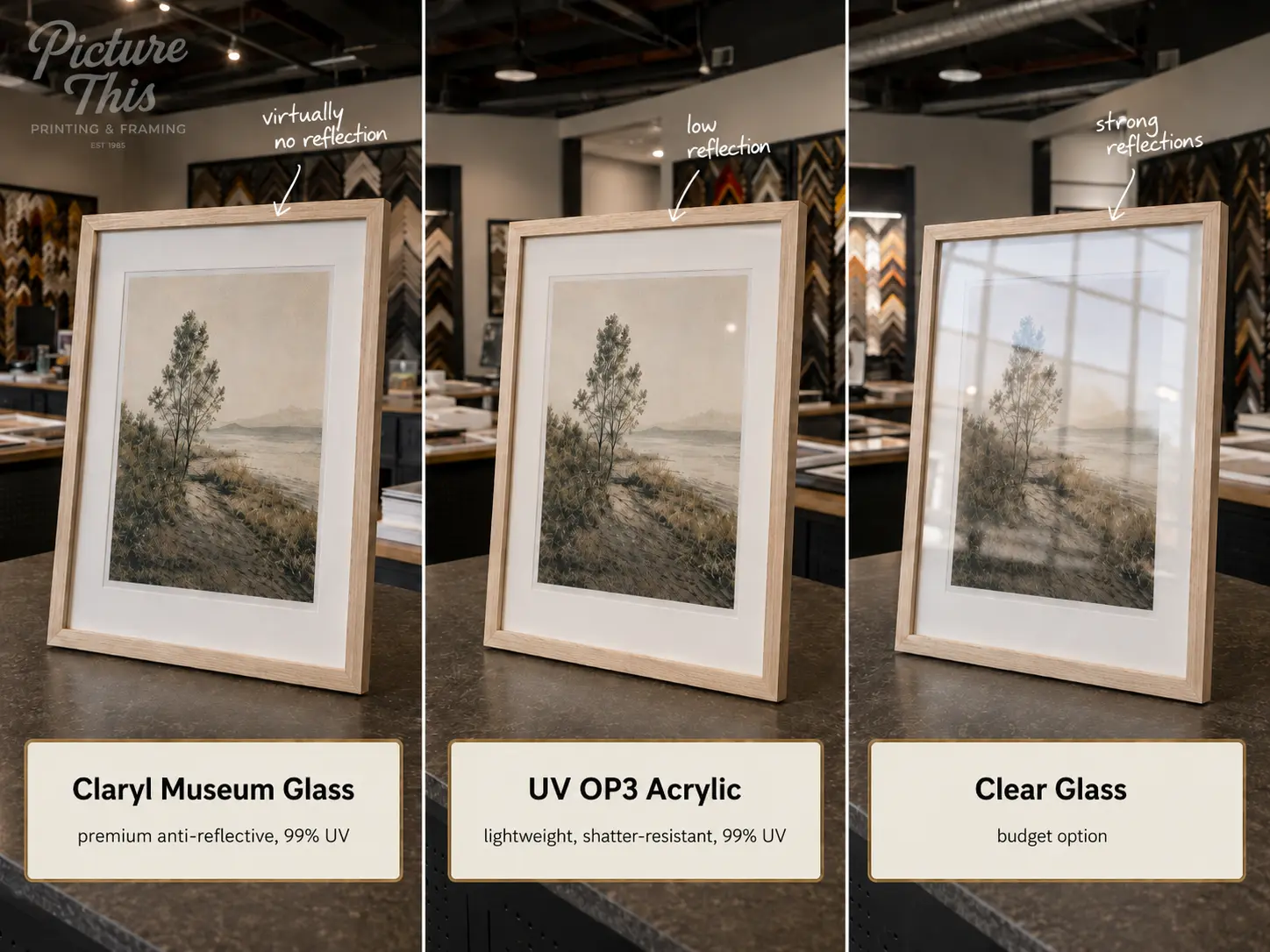
For glazing recommendations to pair with your moulding selection, see our complete breakdown: UV-Protective Glazing Compared: Museum Glass vs. Acrylic vs. Standard Glass.
Total Cost of Ownership: The Real Comparison
Unit price per frame tells you what you'll spend this quarter. Total cost of ownership tells you what you'll spend over the wall-life of the program. Here's how a 200-piece hotel corridor program compares over 20 years:
Swipe to see all columns
| Scenario | Wood (Lasts Full Cycle) | Metal (Replace at Year 12) | Composite (Replace at Year 7 + 14) |
|---|---|---|---|
| Initial install | $$ | $$ | $ |
| Year 7–10 maintenance | — (still performing) | — | $ (full replacement) |
| Year 12–15 | — | $$ (full replacement) | — |
| Year 14 | — | — | $ (second replacement) |
| 20-year total | Lower | Middle | Highest |
| Program consistency | Maintained throughout | Reset at replacement | Reset twice |
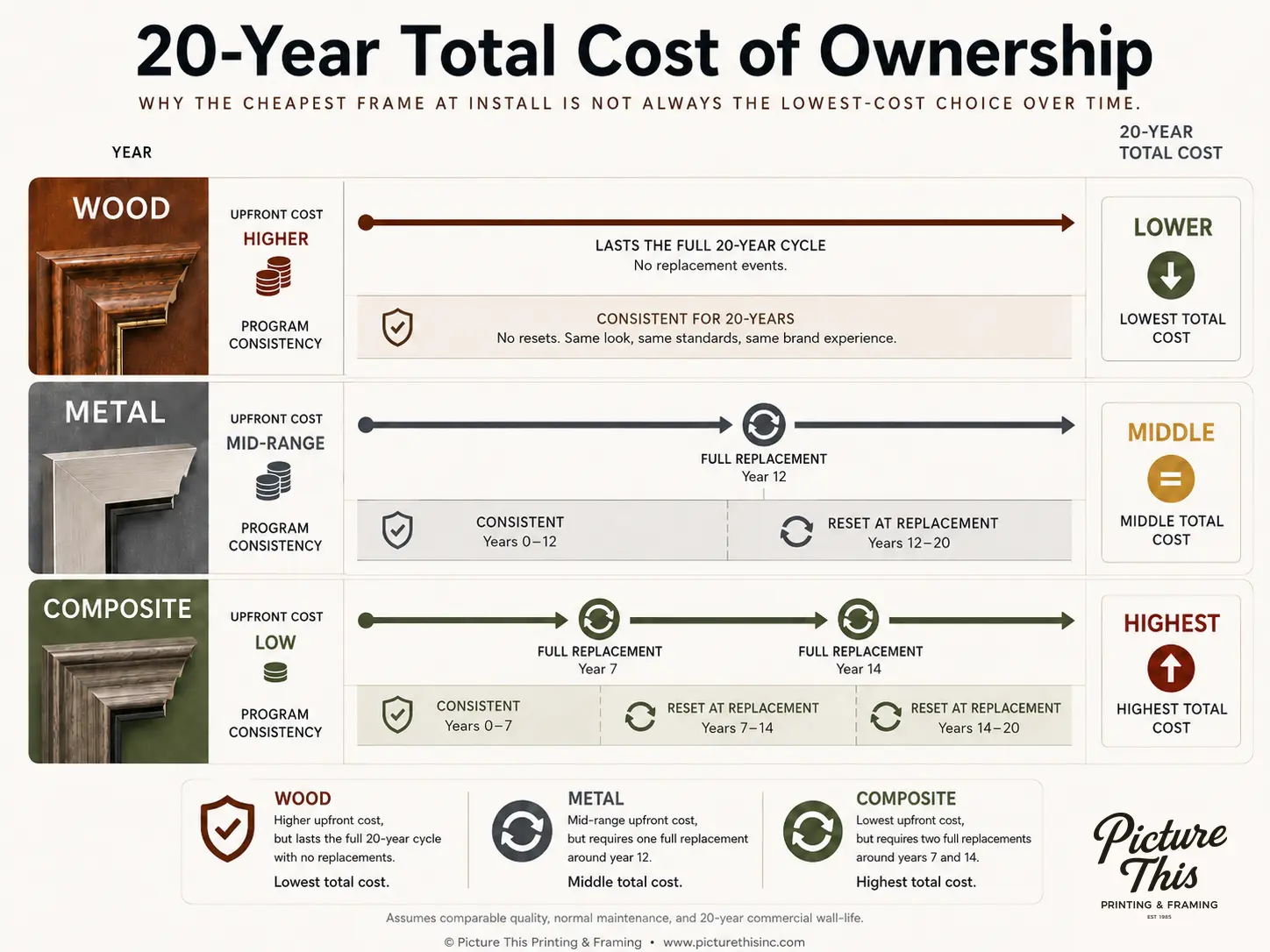
The cheapest frame per unit at install becomes the most expensive frame per year when you factor replacement labor, re-specification, project management, and the visual inconsistency of mixing old and new across a property.
For a full breakdown of how moulding costs fit into overall program budgets — including printing, glazing, labor, and shipping — see our Commercial Art Installation Cost Guide.
Our In-House Moulding Capability
Our 7,000+ sq ft Fullerton facility stocks tens of thousands of linear feet of moulding in wood, metal, and polystyrene profiles. We also work with the industry's best moulding suppliers to ensure access to the widest range of options at all times. We mill, cut, join (glue and nail every joint), and finish all frames in-house — which gives us control over three things that matter at commercial scale:
Lot consistency. Same profile, same finish, same dimensions from unit 1 to unit 5,000.
Re-order matching. Need 50 more frames five years from now? We source from the same stock and apply the same finish formula. No drift.
Custom profiles. If your designer specs something that doesn't exist in our inventory, we work with our supplier network to source or mill custom moulding to spec for programs of 100+ pieces.
Frequently Asked Questions
Which moulding material is cheapest at volume?
Composite is lowest per-linear-foot for orders above 200 pieces. Metal is mid-range. Wood varies widely by species and profile but carries the highest floor price.
What frame material lasts longest on a hotel corridor wall?
Hardwood with a catalyzed lacquer finish. It resists cart strikes, wipes clean with standard housekeeping products, and holds up for the full PIP cycle without replacement.
Can metal frames be refinished after damage?
Anodized aluminum cannot be touched up — dents and scratches require full replacement. Powder-coated metal can sometimes be sanded and recoated.
Are composite frames as durable as wood?
No. Polystyrene composites are lighter and moisture-immune but more brittle on impact. A housekeeping cart that dents a wood frame can crack or chip a composite one.
Which moulding is best for cruise ship installations?
Aluminum or polystyrene composite. Both handle humidity and motion without warping, and both are lightweight. Wood requires sealed backs and marine-grade finish to perform shipboard.
Get a Moulding Spec for Your Project
Every project starts with a conversation about environment, design intent, budget, and timeline. We'll recommend the right material, profile, and finish for your specific scope — whether that's 10 executive-suite frames or 3,000 guest room builds.
Call (714) 447-8749 or request a consultation to get started. We're happy to send physical corner samples of any moulding in our library so you can see and feel the material before committing.
Related Services
Industries We Serve
Questions About Your Project?
Our team in Fullerton is here to help with commercial art installations, custom framing, and museum-quality printing. Call us or request a quote to discuss your specific needs.