All Industries

Healthcare

Healthcare Art Programs: Calming, Durable, Code-Compliant Artwork for Hospitals and Medical Facilities

Art that supports healing environments while meeting the durability, safety, and infection control requirements unique to healthcare facilities.

Healthcare environments demand more from their art than any other commercial setting. Artwork must contribute to a calming, therapeutic atmosphere for patients and families while simultaneously meeting strict requirements for infection control, impact resistance, safety codes, and long-term durability in high-traffic clinical spaces.

Picture This Framing has produced art programs for hospitals, medical office buildings, outpatient clinics, behavioral health facilities, and senior living communities for over four decades. We understand the constraints that healthcare facilities operate under — from Joint Commission readiness to EVS cleaning protocols — and we spec materials accordingly. Every piece we produce is built to survive the realities of a clinical environment, not just look good on install day.

What We Deliver

End-to-End Production for Healthcare

Shatter-resistant acrylic glazing that meets safety requirements for patient care areas
Sealed dust covers and cleanable surfaces compatible with hospital-grade disinfectants
Lightweight framing solutions that reduce wall damage and simplify maintenance
Evidence-based subject matter guidance: nature scenes, landscapes, and calming abstracts
Anti-ligature framing options for behavioral health and high-risk areas
Security mounting hardware to prevent tampering and theft
Room-by-room labeling for efficient installation across large campuses
Archival printing with UV-protective coatings to prevent fading under fluorescent lighting

Our Production

Built In-House, Built to Last

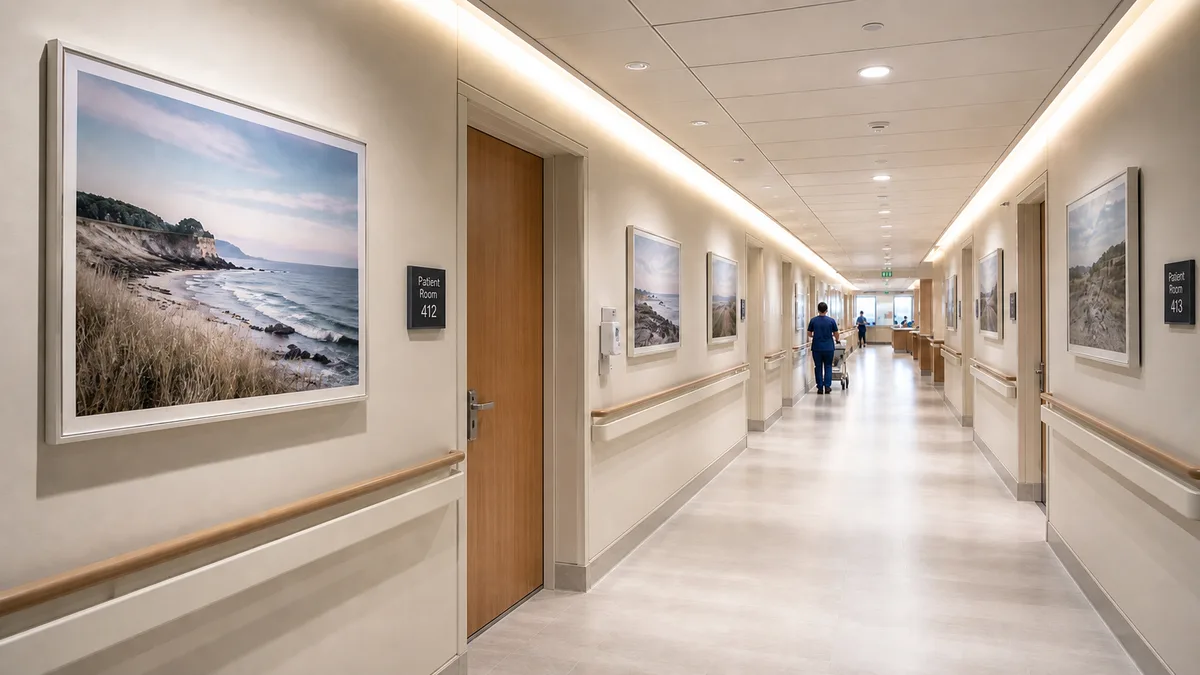
Framed artwork in hospital corridor with shatter-resistant acrylic glazing
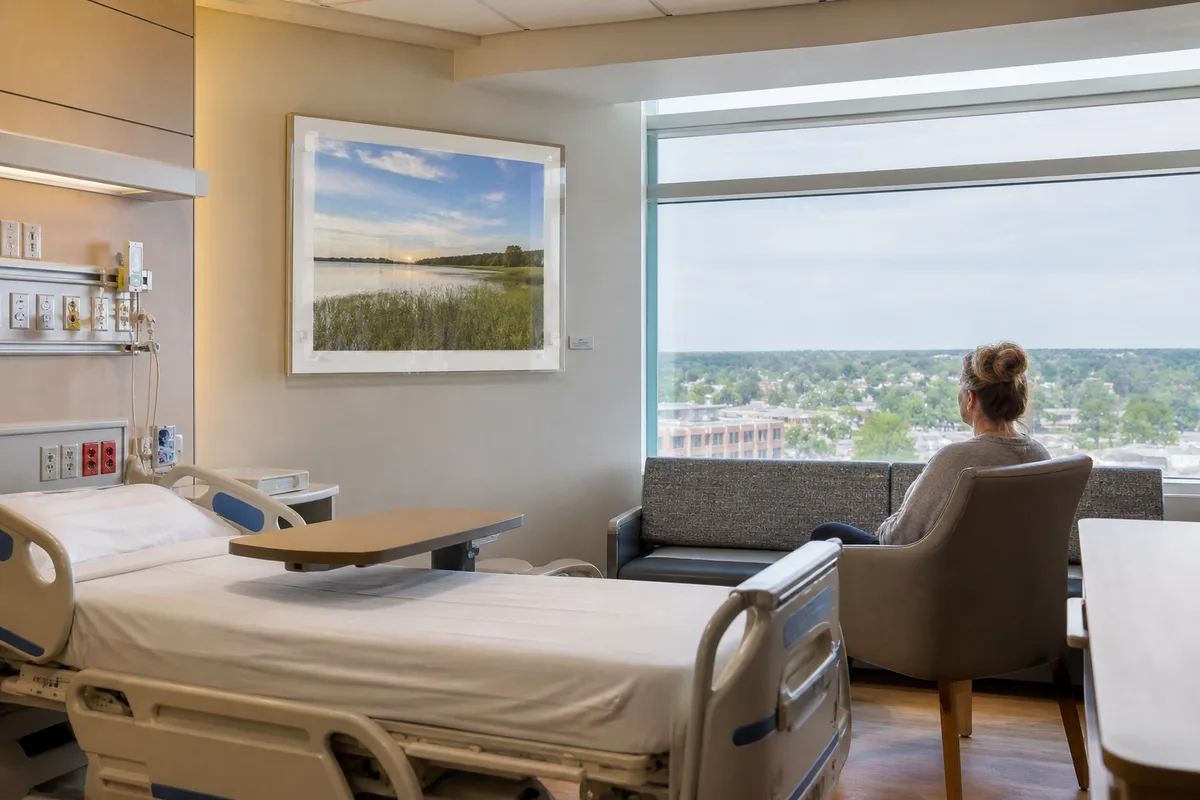
Calming nature artwork in patient room with sealed dust cover framing
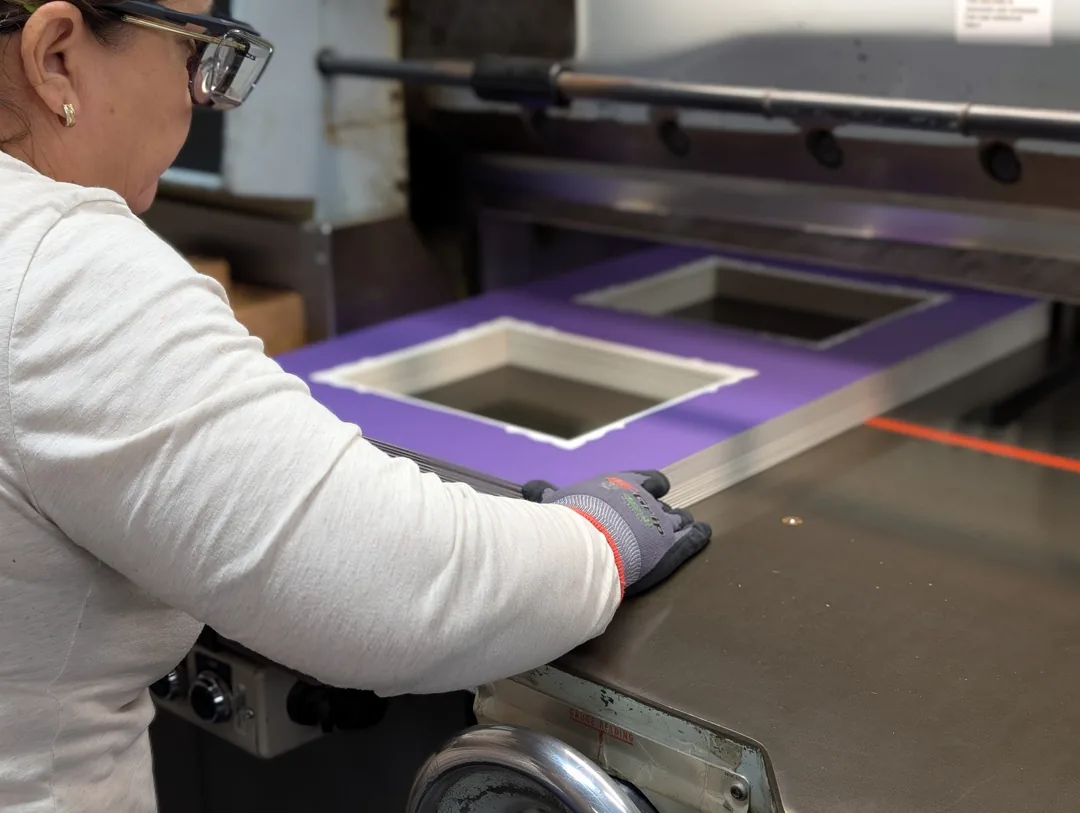
Custom framing production for healthcare facility art program
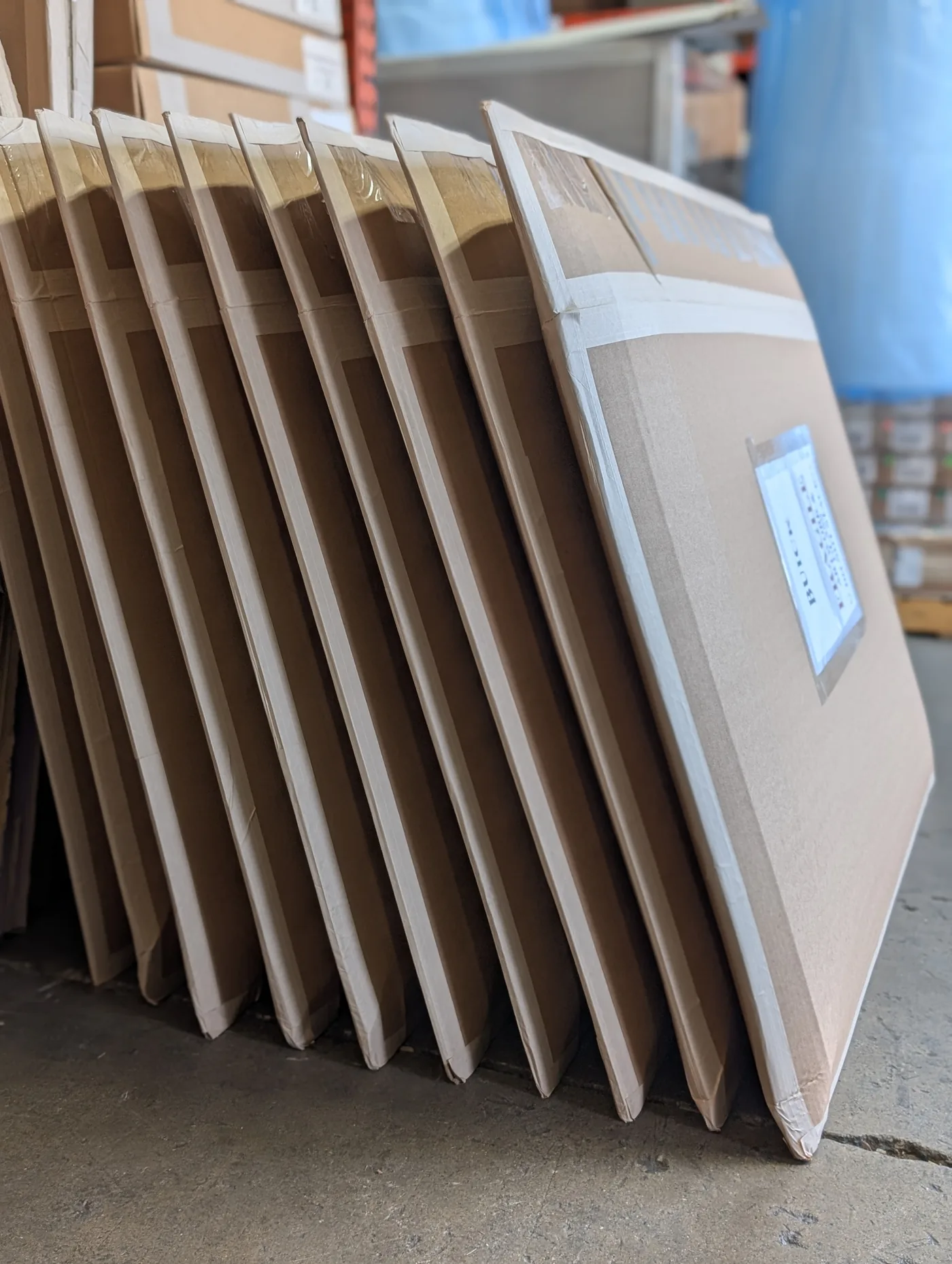
Archival printing for medical campus art installation

The Difference

Healthcare-Specialized Vendor vs. Generic Frame Shop

Glazing
Picture This

Shatter-resistant acrylic standard in all patient areas

The Alternative

Glass frames that become safety hazards when bumped or dropped

Cleanability
Picture This

Sealed dust covers + surfaces rated for hospital-grade disinfectants

The Alternative

Open-back frames that collect dust, allergens, and biofilm

Behavioral Health
Picture This

Anti-ligature flush-mount solutions with tamper-resistant fasteners

The Alternative

Standard wire hanging systems that create safety risks

Art Selection
Picture This

Evidence-based guidance — imagery proven to reduce patient anxiety

The Alternative

Decorative choices with no consideration for clinical outcomes

Durability
Picture This

Materials spec'd for 5+ years of daily cleaning and high traffic

The Alternative

Consumer-grade materials that degrade within 12-18 months

Compliance
Picture This

Documentation for Joint Commission, infection control, and safety reviews

The Alternative

No awareness of healthcare regulatory requirements

Scale
Picture This

Campus-wide programs phased to avoid disrupting active care areas

The Alternative

Small-batch production that cannot meet facility-wide timelines

01

Why Healthcare Art Is Different From Every Other Commercial Program

A hotel can hang glass-glazed frames in guest rooms. A hospital cannot. A corporate office can use delicate linen mats and thin profiles. A behavioral health unit needs tamper-resistant, anti-ligature solutions. Healthcare art programs live at the intersection of aesthetics, safety, and durability — and getting any one of those wrong creates risk. We do not treat healthcare programs like standard commercial jobs with a few material swaps. We spec from the ground up based on the care setting: acute care, ambulatory, behavioral health, pediatric, oncology, or senior living. Each has different requirements, and each gets a tailored material specification.

02

Infection Control and Cleanability

Environmental Services (EVS) teams need to clean every surface in a patient care area, and artwork is no exception. We use sealed dust covers that prevent biofilm accumulation behind frames, acrylic glazing that can be wiped with hospital-grade disinfectants without degradation, and framing profiles that do not have crevices where bacteria can harbor. The goal is art that EVS staff can clean the same way they clean every other surface — quickly, thoroughly, and without special instructions.

03

Evidence-Based Art Selection for Healing Environments

Research consistently shows that representational nature imagery — landscapes, water scenes, gardens, and botanicals — reduces patient anxiety, lowers pain perception, and improves satisfaction scores. Abstract art, particularly with sharp angles or ambiguous content, can increase anxiety in vulnerable patients. We guide healthcare clients toward subject matter that has demonstrated therapeutic benefit, and we steer them away from imagery categories that evidence identifies as counterproductive in clinical settings.

04

Behavioral Health and Anti-Ligature Requirements

Behavioral health units, psychiatric facilities, and certain inpatient settings require artwork that cannot be used for self-harm. This means no glass, no wire hanging systems, no protruding hardware, and frames that are flush-mounted to the wall with tamper-resistant fasteners. We produce anti-ligature art solutions that meet these requirements while still providing a therapeutic visual environment — because bare walls in a behavioral health unit are themselves a clinical problem.

Need a quote for your healthcare project?

Tell us about your program — piece count, timeline, and any special requirements. We respond within one business day.

Start Your Project

8 Requirements Your Healthcare Art Vendor Must Meet

1

Shatter-resistant glazing in all patient areas

Glass is a safety risk in clinical environments. Acrylic glazing eliminates breakage danger while maintaining optical clarity.

2

Cleanable surfaces compatible with EPA-registered disinfectants

Every component — frame, glazing, dust cover — must withstand routine cleaning with hospital-grade products.

3

Sealed dust covers that prevent biofilm accumulation

Open-back frames collect dust, allergens, and moisture. Sealed backs maintain hygiene and simplify maintenance.

4

Security hardware to prevent removal and tampering

Wall-mounted art in public and patient areas needs tamper-resistant fasteners that only maintenance staff can remove.

5

Anti-ligature options for behavioral health settings

Flush-mount installations with no protruding hardware, no wire, and no glass — meeting safety requirements without sacrificing aesthetics.

6

Evidence-based subject matter expertise

Your vendor should understand which imagery categories support healing outcomes and which ones evidence shows can harm them.

7

Lightweight construction to minimize wall damage

Healthcare facilities renovate frequently. Lightweight frames reduce wall repair costs during turnover and remodeling.

8

UV-protective coatings for fluorescent-lit environments

Continuous fluorescent exposure fades unprotected prints. UV-protective glazing and archival inks prevent color shift over years of exposure.

Our Process

How Your Healthcare Program Gets Built

1

Facility Assessment & Specification

We review your care settings, safety requirements, and compliance standards. Patient rooms, corridors, waiting areas, and behavioral health units each get tailored material specifications.

2

Art Selection Guidance & Proofing

We help select evidence-based imagery and produce physical proofs for approval. Color accuracy matters in healthcare — calming blues and greens need to render accurately, not shift under fluorescent lighting.

3

Production & Safety Compliance

Every piece is built with the specified safety features — acrylic glazing, sealed backs, security hardware, anti-ligature mounting — and inspected before packaging.

4

Labeled Packaging & Installation

Pieces are labeled by unit, floor, and room for efficient installation. Large campus rollouts are phased to minimize disruption to active care areas.

Our best work is under wraps.

Our clients like it that way.

What we can tell you: you've almost certainly seen it. In person. Probably more than once.

Call us and ask — we love that conversation.

Let's Talk

Where We Work

Produced in our Fullerton, California facility with nationwide healthcare facility shipping
Serving hospitals and medical campuses in Orange County, Los Angeles, and across the United States
Local installation available throughout Southern California for medical facility projects
Over 40 years of experience with commercial healthcare art installations

Frequently Asked Questions: Healthcare

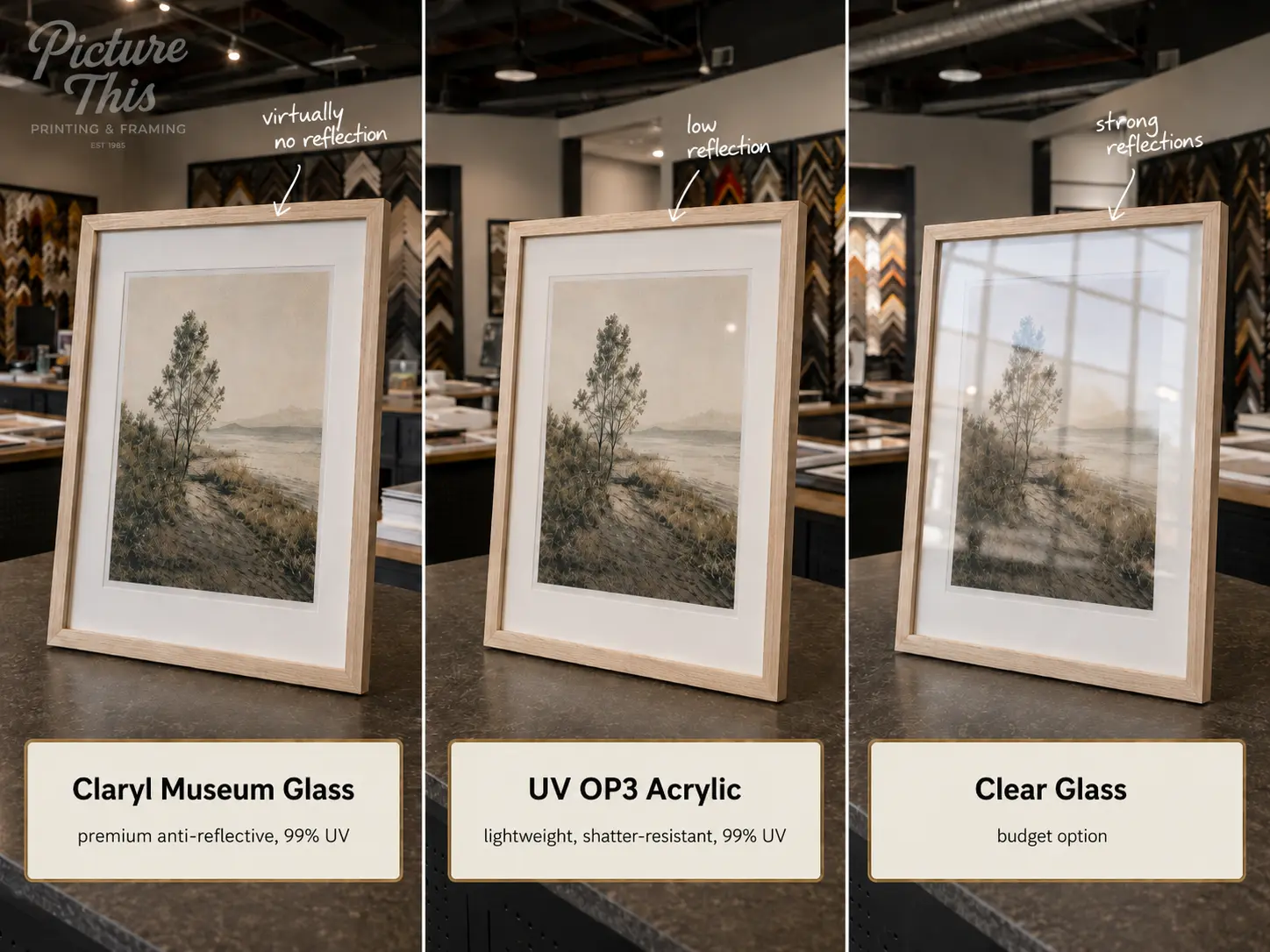
Acrylic glazing is the standard for patient care areas. It is shatter-resistant, lightweight, and can be cleaned with hospital-grade disinfectants. We offer clear acrylic, non-glare acrylic, and UV-protective acrylic (UV OP3) depending on the location and light exposure.

Yes. We produce flush-mounted artwork with no protruding hardware, no wire hanging systems, and no glass. Frames are secured to the wall with tamper-resistant fasteners that require specialized tools to remove. These solutions meet the safety requirements of behavioral health, psychiatric, and high-risk inpatient settings.

We use sealed dust covers that prevent biofilm and allergen accumulation behind frames, acrylic glazing that withstands EPA-registered disinfectants, and framing profiles without crevices where contaminants can collect. EVS staff can clean our framed art the same way they clean any other surface in the facility.

Evidence-based research supports representational nature imagery — landscapes, water scenes, gardens, and botanicals — as the most therapeutic for patients. We guide clients away from abstract art with sharp angles or ambiguous content, which studies have linked to increased patient anxiety. Pediatric settings may incorporate age-appropriate themes within the same evidence-based framework.

A typical hospital art program of 200 to 500 pieces takes 16 to 28 weeks from signed proposal to installed. The timeline depends on moulding availability, campus size, and phasing requirements to avoid disrupting active care areas. We can compress timelines by selecting from in-stock moulding profiles.

Yes. We regularly collaborate with healthcare-specialized interior designers and art consultants who provide artwork selections and specifications. We produce proofs to their standards, coordinate production with their project timelines, and deliver labeled packages that align with their installation drawings.

Ready to Start Your Healthcare Art Program?

Share your facility type, care settings, and timeline. We will recommend materials and build a production plan that meets your clinical requirements and budget.